
Table of Contents
ToggleThe mantel is the first thing guests notice when they walk into a living room during the holidays. It’s also one of the most versatile canvases for seasonal decor, no power tools, no permits, and no permanent changes required. Whether the goal is classic charm or modern minimalism, a well-styled mantel sets the tone for the entire room. This guide walks through proven design themes, practical DIY projects, and layering techniques that elevate a fireplace from blank wall to festive centerpiece.
Key Takeaways
- Your Christmas mantel decor is the first focal point guests notice in a living room, making it the ideal platform to set a festive tone with minimal commitment or permanent changes.
- Classic red-and-green or white-and-silver palettes deliver instant holiday elegance, while minimalist designs emphasize intentional spacing and natural textures for a modern approach.
- Layer your Christmas mantel decor by starting with a tall anchor piece, adding varying heights with odd-numbered groupings, and letting elements overhang the edges for visual depth and balance.
- Three budget-friendly DIY projects—wood bead garlands, painted wooden signs, and faux log candles—can be completed in under two hours using basic tools and minimal materials.
- Avoid common styling mistakes like symmetrical arrangements, ignoring scale differences, and mixing too many competing textures or finishes that create visual clutter.
- Incorporate warm LED string lights or battery-operated candles tucked into garland and hurricanes to add dimension and ambiance while maintaining safety with proper clearance from real flames.
Why Your Mantel Deserves Special Holiday Attention
The mantel occupies prime real estate at eye level and anchors most living spaces. Unlike corners or side tables, it’s a horizontal platform with vertical wall space, ideal for creating depth and visual interest.
From a design standpoint, the mantel acts as a natural focal point. Fireplaces draw people in, and a thoughtfully decorated shelf reinforces that pull. It’s also one of the few places in a home where layering textures, heights, and materials won’t feel cluttered if executed properly.
Practically speaking, mantel decor is low-commitment. It doesn’t require drilling into walls, moving furniture, or wrestling with outdoor lights in freezing weather. Most setups can be assembled in under an hour with items already on hand or easily sourced from local retailers.
Classic Christmas Mantel Themes That Never Go Out of Style
Traditional Red and Green Elegance
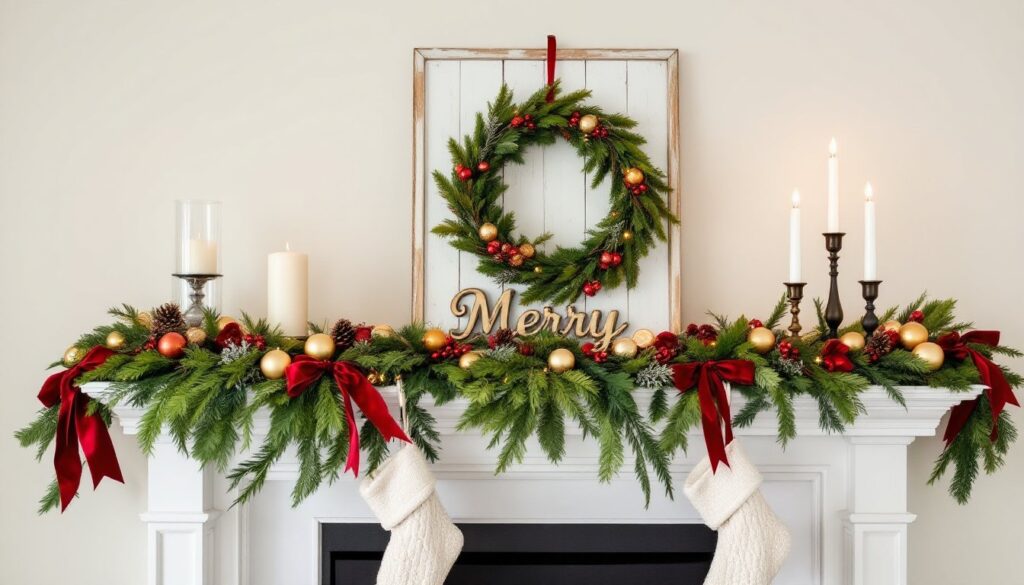
This palette remains a go-to because it delivers instant holiday recognition. Start with a base of fresh or faux garland, cedar, pine, or mixed evergreen works well. Drape it asymmetrically across the mantel, letting it spill over one edge for a more organic look.
Add velvet ribbon in deep red or hunter green, woven through the garland or tied into oversized bows at the corners. Tuck in small ornaments (shatterproof glass balls in varying sizes) to fill visual gaps. For height, flank the arrangement with matching candlesticks or a pair of mercury glass hurricanes holding pillar candles.
Incorporate natural elements like pinecones, dried orange slices, or berry sprigs. These textures break up the shine of ornaments and add dimension. Hang stockings from mantel clips (not nails) to avoid damaging the shelf edge. Choose stockings in coordinating fabrics, wool, burlap, or quilted cotton, rather than identical sets, which can look too matchy.
Winter Wonderland Whites and Silvers
A monochromatic white-and-silver scheme creates a crisp, elegant vibe without sacrificing warmth. Begin with a flocked garland or white-painted branches as the foundation. Flocking adds texture and mimics fresh snowfall, especially effective when paired with cool LED string lights tucked into the foliage.
Layer in silver accents: mirrored ornament balls, galvanized metal stars, or brushed nickel candleholders. Vary the finish, mix matte white ceramics with glossy metallics to prevent flatness. A central statement piece, like a white ceramic tree or a vintage silver tray propped vertically, anchors the display.
For added dimension, incorporate faux fur, cable-knit throws, or white birch logs stacked at one end of the mantel. These tactile elements soften the metallic shine and make the space feel inviting rather than sterile. Keep greenery minimal, white-tipped pine or eucalyptus sprigs work without competing with the palette.
Modern and Minimalist Christmas Mantel Designs
Minimalist doesn’t mean boring, it means intentional. Strip away excess and let each element breathe. Start with a single statement garland or skip greenery entirely in favor of geometric shapes.
A popular approach: three matching vessels (ceramic vases, wooden candlesticks, or matte black lanterns) spaced evenly across the mantel. Fill one with white taper candles, another with a single oversized ornament, and leave the third empty. The negative space is the design.
Alternatively, lean a large-scale piece of art or an oversized wreath against the wall above the mantel rather than hanging it. This creates a relaxed, layered look without hardware. Pair it with a few sprigs of eucalyptus in a simple glass bottle and a single wood bead garland draped loosely across the front edge.
Stick to a tight color palette: whites, blacks, natural wood tones, or muted greens. Avoid metallics and sparkle unless they’re brushed or antiqued finishes. The goal is cohesion, not contrast. Many modern approaches emphasize sustainable materials like natural textures and reusable decor, which align with both aesthetic and practical considerations.
DIY Mantel Decor Projects to Try This Season
Building custom decor gives control over color, scale, and budget. Here are three approachable projects:
1. Wood Bead Garland
Materials: 1.5- to 2-inch unfinished wood beads, jute twine, wood glue (optional).
Thread beads onto twine, spacing them an inch apart or clustered tightly depending on the look. Knot each end and drape across the mantel. For a tapered effect, graduate bead sizes from large at the center to small at the ends. Total cost: under $15 for a 6-foot garland.
2. Painted Wooden Signs
Materials: 1×6 or 1×8 pine board (cut to 18–24 inches), sandpaper (120-grit), primer, acrylic paint, stencils or painter’s tape.
Sand the board smooth, prime, and paint a base coat (white, black, or natural wood stain). Use stencils or freehand lettering for phrases like “Merry” or “Joy.” Distress edges lightly with fine-grit sandpaper for a farmhouse feel. Lean against the wall or mount with sawtooth hangers. Time: 2 hours including dry time.
3. Faux Candles from Birch Logs
Materials: Birch log sections (3–5 inches diameter, cut to varying heights), drill with 1.5-inch Forstner bit, battery-operated tea lights.
Drill a shallow recess (about 0.5 inches deep) into the top of each log to hold the tea light. Arrange logs in a cluster at one end of the mantel for asymmetrical balance. The white bark contrasts beautifully with darker mantels and adds organic texture. Cost: minimal if sourcing logs locally.
All three projects require basic tools, no miter saw or router necessary. They’re also reversible and storable, making them practical for annual reuse. For broader seasonal home decor strategies, these DIY elements can be mixed with store-bought pieces without looking disjointed.
How to Layer and Style Your Mantel Like a Designer
Layering creates depth and prevents a flat, “items lined up on a shelf” look. Here’s the process:
Step 1: Start with the Tallest Element
Place the tallest piece (mirror, artwork, wreath, or oversized sign) centered or off-center on the wall above the mantel. This anchors the entire arrangement and gives the eye a starting point.
Step 2: Add the Base Layer
Lay garland, ribbon, or a table runner across the front edge of the mantel. This softens the hard line of the shelf and creates a horizontal foundation. Drape asymmetrically, one side shorter, one side cascading, for a more natural feel.
Step 3: Build Height Variation
Add candlesticks, vases, or lanterns in varying heights: short (4–6 inches), medium (8–12 inches), and tall (14+ inches). Group items in odd numbers (three or five) and stagger them left to right. Avoid lining everything up evenly.
Step 4: Fill Gaps with Filler Items
Tuck smaller objects, ornaments, pinecones, small figurines, into the gaps between larger pieces. These fill visual holes without crowding. Nestle them into garland or lean them against taller items.
Step 5: Add Overhang and Texture
Let some elements extend beyond the mantel edge: ribbon tails, garland tendrils, or stockings. This breaks the rigid boundary of the shelf and integrates the mantel with the surrounding wall.
Step 6: Light It Up
String lights (warm white LEDs) or candles (real or battery-operated) add warmth and dimension, especially in evening settings. Weave lights through garland or place them inside glass hurricanes. Avoid overhead-only lighting, side or back lighting highlights textures.
Safety Note: If using real candles, ensure at least 12 inches of clearance above flames and never leave them unattended. Battery-operated flicker candles offer the same ambiance without fire risk.
Many of these layering principles are featured in curated holiday decor showcases, where professional stylists demonstrate how to balance scale, color, and texture.
Common Mistakes to Avoid:
- Too much symmetry. Perfect pairs on each end look staged. Offset one side slightly.
- Ignoring scale. Small items disappear on a large mantel: oversized pieces overwhelm a narrow one.
- Clashing textures. Mixing too many finishes (glitter, matte, rustic, modern) creates visual noise. Stick to two or three material types.
- Neglecting the firebox. If the fireplace isn’t in use, fill it with stacked birch logs, a basket of pinecones, or a cluster of lanterns to complete the look.