
Table of Contents
ToggleThe transition from your home’s interior to the backyard shouldn’t feel like an afterthought, yet many patio doors open onto a single slab step or a rickety platform that’s long overdue for replacement. Well-designed patio door steps do more than bridge the height gap: they extend your living space, improve accessibility, and set the tone for the outdoor experience. Whether the door opens to a deck, garden path, or patio, the steps need to handle foot traffic, weather exposure, and the aesthetic expectations of both sides. This guide walks through material choices, design approaches, and safety features that turn a basic transition into a polished architectural detail.
Key Takeaways
- Well-designed patio door steps improve accessibility, extend living space, and signal home maintenance—a cost-effective upgrade that boosts curb appeal and resale value.
- Material choices range from pressure-treated wood and composite decking to poured concrete, natural stone, and pavers, each offering different durability, maintenance, and aesthetic benefits.
- Patio door steps must meet IRC code standards: maximum 7¾-inch rise, minimum 10-inch run, consistent dimensions within ⅜ inch, and a 36-inch-deep landing on the exterior side of the door.
- Proper drainage, slip-resistant finishes, and frost-line footings prevent trip hazards, water damage, and freeze-thaw cracking—critical safety and longevity factors.
- Design ideas like wide platforms, floating treads, integrated planters, and LED lighting transform basic transitions into polished architectural details that enhance both function and outdoor ambiance.
- Check local building codes before starting your patio door steps project, as new construction and structural changes typically require permits and inspections.
Why Your Patio Door Steps Matter More Than You Think
A patio door step isn’t just a code requirement, it’s a structural handoff between two distinct spaces. Most residential door thresholds sit 6 to 8 inches above grade, and the International Residential Code (IRC) requires a landing at least 36 inches deep on the exterior side of any door. That landing or step platform takes constant abuse from foot traffic, moisture infiltration, freeze-thaw cycles, and UV exposure.
Poorly designed steps create trip hazards, collect standing water, and accelerate rot or cracking. A well-built transition, on the other hand, improves accessibility for kids, pets, and anyone carrying groceries or patio furniture. It also frames the view from inside, acting as a visual threshold that signals the shift from conditioned space to outdoor living.
From a resale perspective, tidy patio door steps signal maintenance and care. Cracked concrete, splintered wood, or uneven pavers suggest deferred upkeep, red flags during walkthroughs. Upgrading this detail is one of the most cost-effective exterior improvements a homeowner can make.
Material Options for Patio Door Steps
Wood and Composite Decking Steps
Pressure-treated lumber remains the most common choice for patio door steps, especially when the door opens onto a deck. Standard 2×6 or 2×8 treads span joists spaced 16 inches on center, and the material handles moderate weather exposure if properly sealed. Expect to re-stain or re-seal every two to three years to prevent splintering and rot.
Composite decking offers a longer service life with minimal maintenance. Brands like Trex, TimberTech, and Azek resist moisture, insects, and UV degradation, though they cost roughly two to three times more than treated lumber per linear foot. Composites expand and contract more than wood, so fascia boards require proper gapping, typically 1/8 inch per 20 feet of run.
Cedar and redwood steps deliver natural beauty and rot resistance, but they’re softer underfoot and dent more easily than treated pine. These species work well for low-traffic doors opening to gardens or side yards. Whatever wood or composite you choose, check that stair stringers meet IRC standards: maximum 7¾-inch rise, minimum 10-inch run, and consistent dimensions within ⅜ inch from step to step.
Stone, Brick, and Concrete Solutions
Poured concrete steps provide the most durable, low-maintenance option for patio doors. A typical 4-inch-thick tread reinforced with #4 rebar on 12-inch centers will outlast most wood assemblies by decades. Finish options range from broom-swept texture (good slip resistance) to stamped patterns that mimic flagstone or tile. Budget $8 to $15 per square foot for basic poured steps, more for decorative finishes.
Natural stone, bluestone, flagstone, or granite, adds texture and color variation that complements traditional and contemporary homes. Stone treads should be at least 2 inches thick for structural integrity and supported on a compacted gravel base or mortar bed. Irregular flagstone works for casual cottage aesthetics, while cut bluestone suits formal or Southern home design palettes.
Brick steps deliver classic curb appeal but require skilled masonry to avoid lippage and water pooling. Running bond or herringbone patterns add visual interest, and a mortar cap on exposed brick edges prevents freeze-thaw spalling. Expect to repoint mortar joints every 10 to 15 years in northern climates.
Paver steps, concrete or clay, offer a middle ground: easier to install than poured concrete, more uniform than natural stone. Install over a 6-inch compacted gravel base with 1 inch of bedding sand, and use edge restraints to prevent shifting. Polymeric sand in the joints resists weed growth and insect intrusion.
Design Ideas to Match Your Home’s Style
Wide platform steps create a generous landing that functions as an extension of the patio or deck. Instead of a narrow single tread, build a 4-foot-deep by 6-foot-wide platform that accommodates a bench, potted plants, or a boot tray. This approach works especially well for sliding or French doors that open to dining or entertaining areas.
Floating tread steps made from thick wood planks or stone slabs deliver a modern, minimalist look. Cantilevered treads appear to hover, supported by hidden steel brackets or embedded into poured concrete walls. This design requires precise engineering, consult a structural engineer if the rise exceeds 24 inches.
Integrated planter steps combine function and greenery. Frame the sides of the steps with built-in planter boxes using the same material as the treads. Fill with low-maintenance perennials or ornamental grasses to soften the transition. Outdoor planter steps can double as seating, making them ideal for small patios.
Wraparound steps that extend along two or three sides of a patio door create multiple approach paths and additional seating. This layout works well for ranch-style homes or walk-out basements where the door sits close to grade. Budget extra material and labor, wraparound steps typically require 30 to 50 percent more framing and finish material than a straight run.
L-shaped or switchback steps handle steep grade changes (more than 24 inches) without exceeding code-compliant rise limits. A mid-flight landing provides a rest point and can incorporate a turn, which helps on sloped lots. Check local codes, many jurisdictions require a handrail for any flight with more than three risers.
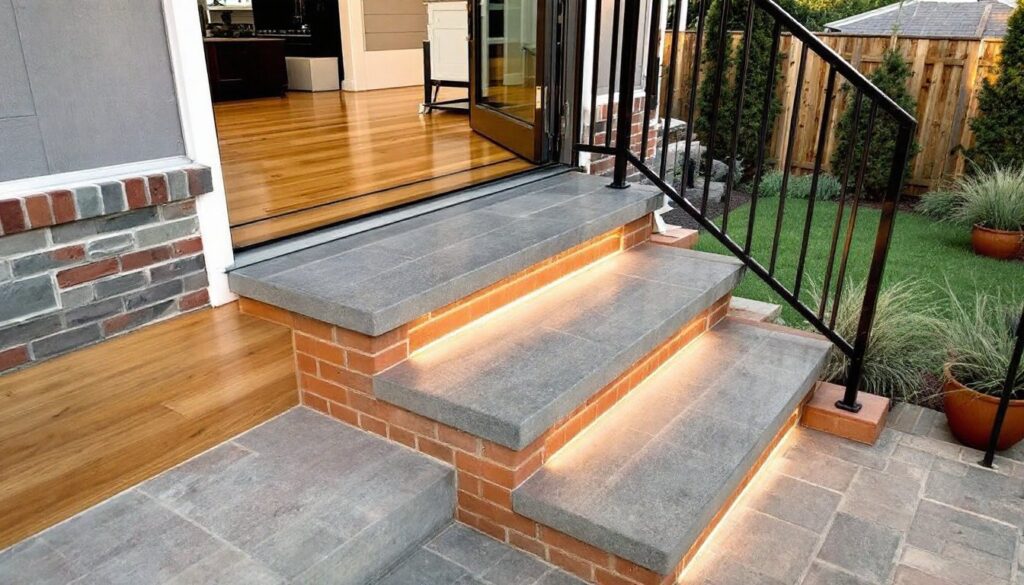
Mixed-material designs pair stone or brick risers with wood or composite treads, adding texture and visual contrast. This approach allows homeowners to match existing hardscape (brick patio) while introducing a contrasting tread color. Just ensure materials have similar slip resistance and weather durability.
Illuminated steps with integrated LED strip lighting improve safety and ambiance. Low-voltage (12V) LED strips install beneath tread nosings or within risers, powered by a weatherproof transformer. Photocell controls automate operation at dusk, and most systems draw less than 20 watts for a full flight.
Safety Features and Practical Considerations
Slip resistance should drive material selection. Smooth-troweled concrete and polished stone turn treacherous when wet. Opt for broom-swept concrete, flamed or thermal stone finishes, or composite decking with molded traction ribs. Avoid outdoor carpet, it traps moisture, grows mold, and becomes a slip hazard in freezing weather.
Handrails and grab bars become code-required once a flight has four or more risers (three risers in some jurisdictions). Railings must be 34 to 38 inches above the nosing, with balusters spaced no more than 4 inches apart. Graspable rails have a diameter between 1¼ and 2 inches. If the step run is less than 44 inches wide, a single rail usually suffices: wider runs need rails on both sides.
Drainage and pitch prevent water accumulation. Treads should slope ⅛ to ¼ inch per foot away from the door to shed rain and snowmelt. If the landing drains toward the house, water infiltrates the threshold and can wick into interior flooring. Beginner woodworking projects often overlook pitch, leading to premature rot in wood steps.
Frost footings matter in cold climates. Any masonry or poured concrete step should rest on footings that extend below the frost line, typically 36 to 48 inches in northern states. Shallow footings heave during freeze-thaw cycles, cracking steps and creating trip hazards. Wood steps on deck-style framing can use adjustable post bases on concrete piers.
Permit and inspection requirements vary widely. Cosmetic repairs, replacing a single tread, re-staining wood, rarely need permits. New construction, structural changes, or steps serving as egress from a basement typically do. Call the local building department before ordering materials: unpermitted work can complicate resale and insurance claims.
Lighting placement should illuminate treads without causing glare. Position fixtures on adjacent walls, beneath railings, or recessed into risers so light falls on the tread surface. Avoid overhead floods that cast shadows and obscure step edges. Solar-powered step lights work for low-traffic areas but may not provide enough lumens for primary entries.
Conclusion
Patio door steps set the tone for how a home connects to its outdoor spaces, functionally, aesthetically, and safely. Choosing the right materials, respecting code requirements, and thinking through design details like drainage, lighting, and railings will deliver a transition that holds up to weather and daily use. Whether building a simple platform or a multi-level staircase, the investment in proper planning and quality materials pays off in longevity and curb appeal.