
Table of Contents
ToggleSmall kitchens demand smarter design decisions, and the backsplash is one of the few places where homeowners can inject personality without sacrificing precious square footage. The right backsplash can visually expand a cramped galley layout, bounce natural light into dark corners, and establish a focal point that doesn’t compete with limited counter space. The wrong choice, heavy patterns, dark finishes, or oversized tiles, can make a small kitchen feel even tighter. This guide walks through proven backsplash strategies that enhance small kitchens, from reflective materials that amplify light to strategic pattern placement that adds character without clutter.
Key Takeaways
- Light-reflective backsplash materials like glossy subway tiles, glass, and mirrored finishes visually expand small kitchens and amplify natural and task lighting without adding fixtures.
- Small kitchen backsplash ideas should prioritize scale and proportion, using 3″ × 6″ tiles or similar scaled options rather than oversized tiles that overwhelm limited wall space.
- Strategic pattern placement—confining patterned tiles to a single 2-foot focal point behind the range while flanking with neutral tile—adds personality to small kitchens without creating visual clutter.
- Proper surface preparation, including priming with vapor barriers, shimming uneven walls, and using appropriate grout colors, is essential to prevent the backsplash from looking choppy or emphasizing cramped dimensions.
- Glass and mirrored backsplashes require daily maintenance with vinegar or glass cleaner, while low-maintenance alternatives include recycled glass tiles or porcelain tiles with printed patterns that mimic expensive cement tiles at 30-50% lower cost.
- DIY backsplash installation can reduce project costs by 50%, but requires careful attention to tile placement, grout selection, wet saw operation safety, and electrical outlet positioning with proper box extenders.
Why the Right Backsplash Matters in a Small Kitchen
In a small kitchen, every surface works harder. The backsplash isn’t just splash protection, it’s vertical real estate that can alter how the entire room reads. A poorly chosen backsplash can chop up sightlines, absorb light, and emphasize cramped dimensions.
Light reflection is the most practical function. Kitchens with limited natural light or minimal window area benefit from backsplash materials that bounce ambient and task lighting back into the room. Glossy finishes, glass tiles, and even polished natural stone can increase perceived brightness without adding fixtures.
Visual continuity prevents the “chopped up” look that plagues small spaces. When the backsplash contrasts too sharply with cabinetry, countertops, or wall paint, it creates visual stops that make the room feel segmented. Coordinating tones or extending backsplash material to the ceiling can create a vertical sweep that lifts the eye.
Scale and proportion are critical. Oversized subway tiles (4″ × 12″ or larger) can overwhelm a 6-foot run of wall, while tiny mosaics can read as busy when viewed up close in a compact workspace. The tile size should balance with the backsplash height, typically 18″ between counter and upper cabinets in tight kitchens.
Homeowners often underestimate prep work here. Drywall behind ranges and sinks must be primed with a vapor barrier primer if installing non-waterproof tiles. Uneven walls need floating or shimming before tile installation, or grout lines will telegraph every dip. For renters or hesitant DIYers, peel-and-stick options have improved dramatically, though they require perfectly clean, grease-free surfaces to adhere properly.
Light and Reflective Tile Options to Open Up Your Space
Glossy Subway Tiles for Timeless Appeal
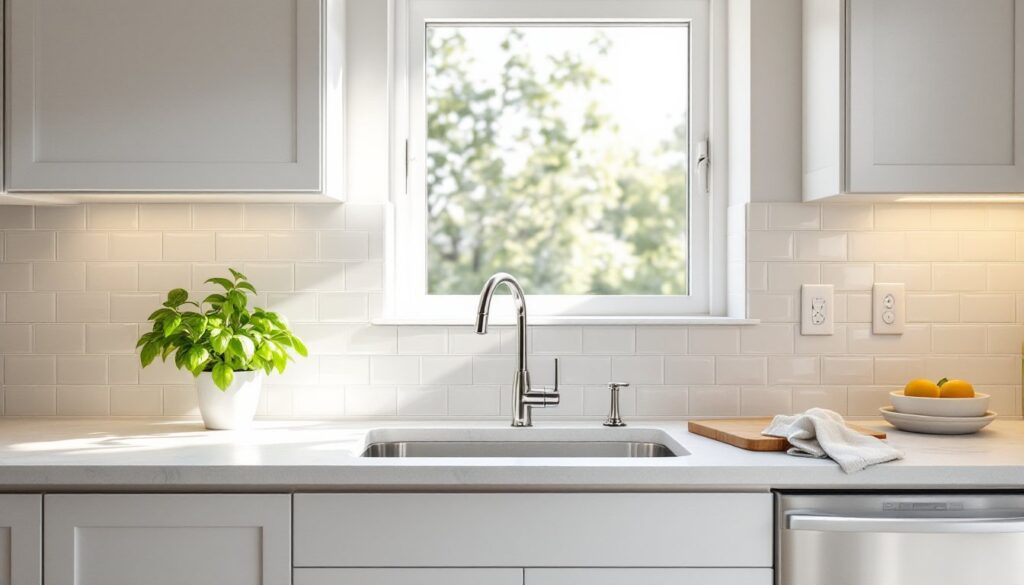
Ceramic subway tiles in a glossy finish remain the workhorse of small kitchen backsplashes for good reason. Standard 3″ × 6″ tiles in white or soft neutral tones reflect both natural and artificial light without the high-gloss “bathroom” look of pure white porcelain. The slight texture variation in ceramic catches light at different angles, adding subtle depth.
Layout choices matter as much as tile selection. Running bond (traditional brick pattern) is safe but can emphasize narrow walls. Vertical stack bond creates the illusion of height, useful in kitchens with low ceilings or standard 8-foot ceiling heights. Herringbone adds movement but requires precise cuts at edges and outlets, budget extra time and 10-15% more material for breakage.
Grout color controls the visual weight. White or light gray grout (unsanded for joints under 1/8″) maintains a seamless look, while dark grout creates a grid that can shrink the space visually. Many experienced DIYers now use epoxy grout in kitchens for stain resistance, though it’s less forgiving during installation, once it sets, it’s permanent.
Installation is straightforward for anyone comfortable with a tile wet saw and notched trowel. Use ¼” × ¼” square-notch trowel for 3″ × 6″ tiles and white modified thin-set mortar to prevent dark patches showing through light tiles. Work in 3-foot sections to keep the mortar workable. Cut outlet openings with a tile wet saw fitted with a diamond blade, and always shut off power at the breaker before working near electrical boxes.
Glass and Mirror Backsplashes for Maximum Light Reflection
Glass tile backsplashes multiply available light better than any ceramic option. Clear or lightly frosted glass in 1″ × 2″ or 3″ × 6″ formats reflects light from under-cabinet fixtures back into the workspace, making task lighting more effective. Specialty kitchen design ideas often feature glass tiles in narrow galley layouts for exactly this reason.
Backlighting transforms glass tile into a design feature. LED strip lighting installed behind translucent glass tile (requires leaving a ½” gap between tile and wall, mounted on furring strips) creates a soft glow. This adds complexity, electrical work must comply with NEC Article 410 for luminaire installation, and most jurisdictions require a permit for adding new electrical circuits. This is a job for a licensed electrician unless the homeowner has verifiable experience with residential electrical.
Mirrored backsplashes deliver maximum reflection but come with practical trade-offs. Antique mirror tiles (4″ × 4″ or larger formats with distressed silvering) hide water spots and fingerprints better than standard mirror. They install like ceramic tile but require white thin-set to avoid dark mortar showing through. Standard mirror panels require professional installation, cutting tempered mirror requires specialized tools, and edges must be polished to prevent chipping.
Maintenance is the hidden cost. Glass and mirror show every water spot, grease spatter, and fingerprint. Plan on daily wiping with a vinegar solution or commercial glass cleaner. Grout lines on glass tile also require sealing with a penetrating grout sealer every 12-18 months to prevent staining.
Recycled glass tiles offer an eco-friendly middle ground. Brands using post-consumer glass in resin matrices come in terrazzo-style finishes that hide minor splatters while still reflecting light. They install identically to ceramic tile and require less fussy maintenance than pure glass.
Bold Patterns and Textures That Add Character Without Clutter
Geometric and Moroccan Tiles for Visual Interest
Patterned cement tiles (sometimes called encaustic tiles) let small kitchens punch above their weight in personality. A 2-foot run behind the range in bold geometric or Moroccan patterns creates a focal point without overwhelming the room. The key is restraint, limit patterned tile to one zone and flank it with neutral field tile or painted drywall.
True cement tiles are porous and require sealing before and after grouting. Use a penetrating sealer (not topical) applied in two coats, allowing 24 hours between applications. Skip this step and grout will permanently stain the tile surface. These tiles are also softer than porcelain, so cuts require a wet saw with a fresh diamond blade and slow, steady pressure to avoid chipping.
For a lower-maintenance alternative, porcelain tiles with printed patterns mimic the cement tile look without the sealing requirements. Brands now offer realistic reproductions of traditional Moroccan patterns in through-body porcelain that installs and cleans like standard ceramic. They cost 30-50% less than cement tiles and stand up better to acidic cleaners.
Layout strategy prevents pattern overload. A common approach: small space living ideas often recommend using patterned tile from countertop to the bottom of upper cabinets (typically 18″), then transitioning to solid paint or a narrow band of matching solid tile to the ceiling. This keeps the pattern at eye level without creating a dizzying effect.
Grout width affects pattern legibility. 1/16″ grout lines let intricate patterns flow together, while wider 1/8″ lines emphasize each tile as a separate unit. Use unsanded grout for tight joints and a grout color that matches the tile’s dominant hue to avoid a waffle-iron effect.
Natural Stone and Textured Materials for Depth
Stacked stone veneer and split-face tile add three-dimensional texture that creates depth through shadow play rather than color contrast. Natural stone in neutral tones, slate, quartzite, or travertine, works in small kitchens when installed in a ledger panel system (interlocking 6″ × 24″ panels) rather than individual stones. Panels install faster and maintain consistent depth, critical when working in tight spaces.
These materials add ½” to ¾” of depth to the wall, which can interfere with outlets and switch plates. Box extenders (plastic rings that bring electrical boxes flush with the new surface) are required and must comply with NEC Article 314.20, which mandates boxes be flush with combustible surfaces. This is a simple fix but one that’s often missed until mid-project.
Sealing is non-negotiable for natural stone in wet areas. Impregnating sealers penetrate the stone and allow it to breathe while repelling water and oil. Apply before grouting, then again after final cleanup. Stone in high-splash zones (directly behind sinks) should be resealed annually.
3D ceramic tiles offer textured depth without stone’s maintenance. Wave patterns, geometric reliefs, and dimensional subway tiles in white or light gray add shadow lines that shift with changing light. They install with standard thin-set but require back-buttering (spreading mortar on the back of each tile) to ensure the raised pattern doesn’t create hollow spots that can crack under impact.
A practical alternative: beadboard or shiplap backsplashes painted in semi-gloss or high-gloss finish. This works well in cottage or farmhouse kitchens and costs significantly less than tile, around $2-3 per square foot for MDF beadboard plus paint. Install over a waterproof membrane (15 lb. felt paper or RedGard) and use stainless steel or aluminum trim at the countertop edge to prevent water wicking into the wood.
For design cohesion, backsplash ideas from design experts typically advise sampling materials in the actual kitchen lighting before committing. Natural stone especially can shift in appearance between showroom fluorescents and home LED or incandescent lighting. Order single tiles or small samples and tape them to the wall for at least 48 hours, viewing them in morning, afternoon, and evening light before purchasing full quantities.
Budget considerations: Patterned cement tiles run $8-15 per square foot, porcelain reproductions $4-8, and basic ceramic subway tiles $1-3. Installation costs (if hiring out) typically match or exceed material costs, figure $10-20 per square foot for labor in most markets as of 2026. DIY installation can cut project costs by 50% or more but requires tool investment: tile wet saw ($100-200 rental or $150-400 purchase), notched trowels ($8-15), tile spacers ($5), and a grout float ($10).
Safety note: Wet saw operation requires safety glasses, hearing protection, and keeping hands at least 6 inches from the blade. The water reservoir prevents dust but creates slippery conditions, work on a stable, level surface and keep a dry towel for wiping hands between cuts.