
Table of Contents
ToggleA tired deck doesn’t need replacement, it needs paint. Whether the wood’s gone gray or the old stain is peeling in sheets, a fresh coat of paint can add years to the deck’s life and completely change the look of the backyard. The right color choice sets the tone for outdoor gatherings, complements the home’s exterior, and boosts curb appeal without the cost of rebuilding. Deck paint has come a long way in durability and UV resistance, making it a practical option for high-traffic surfaces exposed to weather year-round. This guide covers color strategies, design patterns, and finish choices that work for real-world decks in 2026.
Key Takeaways
- Fresh deck paint extends the life of an aging deck and dramatically improves curb appeal without the cost of replacement, with quality acrylic latex paints lasting 4–7 years in moderate climates.
- Solid deck paint ideas include timeless colors like charcoal gray (hides dirt), warm taupes (minimizes wear), dark greens and browns (traditional aesthetics), and whites (requiring extensive prep and maintenance).
- Two-tone and multi-color deck designs—such as dark floors with light railings or contrasting borders—add visual interest and safety definition without overwhelming outdoor spaces.
- Proper surface prep is critical to success: sand rough spots, fill cracks, and apply stain-blocking primer if previous stain exists, as skipping primer is the leading cause of paint failure.
- Deck paint outperforms stain on weathered lumber with cracks or mismatched boards due to its opaque coverage, while striped and checkerboard patterns require planning and patience but create stunning focal points.
- Choose deck paint colors based on home style (neutrals for traditional, bold tones for modern, cool colors for coastal) and sun exposure, avoiding dark paints on south-facing decks in hot climates where surfaces can exceed 160°F.
Classic Solid Color Deck Paint Ideas
Solid grays dominate deck paint projects for good reason, they hide dirt, pair with almost any siding color, and don’t compete with landscaping. Medium charcoal grays work especially well on pressure-treated pine or composite decking that’s seen better days. For a cleaner look, go with a light dove gray, but expect to sweep more often.
Warm taupes and tans suit homes with brick, stone, or earth-tone siding. These colors blend the deck into the yard rather than making it a visual endpoint. Taupe also shows less wear around high-traffic areas like stairs and thresholds compared to stark white or black.
Dark greens and browns give a traditional, forest-cabin aesthetic. They work well on older decks with knots and grain you want to hide completely. Hunter green and deep walnut tones absorb heat, so keep that in mind if the deck gets full afternoon sun, barefoot traffic won’t appreciate a scorching surface.
Whites and off-whites create a coastal, resort-style vibe but demand serious surface prep. Any previous stain or tannin bleed will show through unless the deck is primed with a stain-blocking product. Use a 100% acrylic latex deck paint rated for foot traffic and mildew resistance. White decks also require annual cleaning to prevent mold and algae buildup in shaded corners.
Two-Tone and Multi-Color Deck Designs
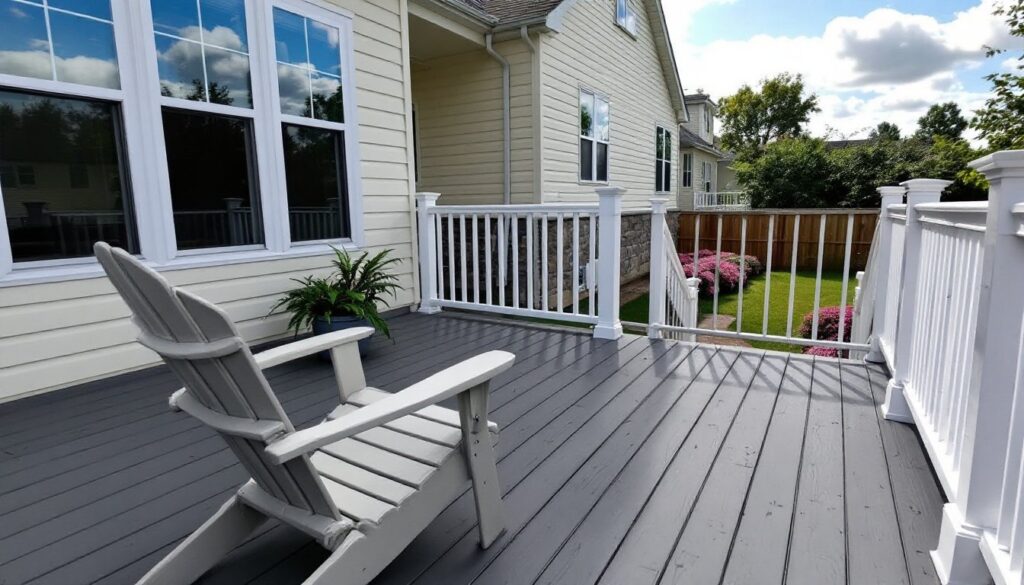
Painting the deck floor one color and the railings another adds visual interest without overwhelming the space. A darker floor with lighter railings keeps the deck feeling open, think charcoal boards with white or cream spindles. This combination also makes the railings stand out for safety, especially in low light.
Flip the script with a light floor and dark railings for a modern, gallery-like effect. Pale gray decking with black aluminum balusters creates clean lines and pairs well with contemporary home styles. Keep in mind that light floors show every leaf, dirt streak, and paw print.
Accent stairs or borders in a contrasting color to define zones. Painting the top step or perimeter boards in a complementary shade breaks up a large deck and highlights transitions. Navy blue stairs leading down from a tan deck add a nautical touch, while painting just the border boards in a darker hue frames the space.
For multi-level decks, assign each tier a slightly different tone within the same color family. A three-level deck in shades of gray, light on top, medium in the middle, charcoal on the lower tier, creates depth without looking chaotic. Stick to the same paint product across all colors to ensure even weathering over time.
Stain vs. Paint: Choosing the Right Finish for Your Deck
Solid-color stain penetrates the wood and shows some grain texture through the finish. It’s a middle ground for those who want color but don’t want the completely opaque look of paint. Solid stains typically last 3–5 years before needing recoating and don’t peel the way thick paint can if moisture gets underneath.
Deck paint forms a thicker film on the surface and hides all wood grain, which is ideal for older lumber with cracks, weathering, or mismatched boards. A quality acrylic latex deck paint should last 4–7 years in moderate climates with proper prep. The downside: if the paint fails, it often flakes or bubbles, requiring scraping and sanding before recoating.
Prep work differs significantly. Stain requires a clean, dry surface but doesn’t demand the same level of smoothness as paint. For paint, homeowners need to sand rough spots, fill cracks with exterior wood filler, and apply a stain-blocking primer if the deck was previously stained or has tannin bleed. Skipping primer is the most common reason paint jobs fail within a year.
Consider painting outdoor furniture or garden accents in the same finish to tie the deck into the broader yard design. Moisture is the real enemy of both products, so ensure deck boards have proper spacing (at least 1/8 inch) for drainage and airflow. If the deck stays wet after rain or morning dew, no paint or stain will perform well long-term.
Pattern and Design Ideas for Painted Decks
Adding geometric or repeating patterns turns a flat deck into a design feature, but it requires planning, patience, and painter’s tape. DIY decorating projects like painted floors share similar techniques, map out the design on paper first, then transfer measurements to the deck using chalk lines.
Striped and Checkerboard Patterns
Horizontal stripes running the width of the deck make a narrow space feel wider. Alternate two colors in equal or varying band widths, classic combinations include white and navy, or gray and sage green. Use a chalk line to snap straight guides, then tape off sections with 2-inch painter’s tape rated for outdoor use. Paint every other stripe, let it dry completely (24–48 hours depending on humidity), then tape and paint the alternating stripes.
Checkerboard patterns work best on square or nearly square deck sections. Choose high-contrast colors so the pattern reads clearly from a distance. Measure and mark a grid, 12×12-inch or 16×16-inch squares are manageable sizes. Paint all squares of one color first, allow full cure time, then mask and paint the second color. This method takes time, but the result mimics vintage porch floors popular in historic neighborhoods.
For both patterns, finish with a clear, non-slip deck sealer once the paint has cured for at least 72 hours. The sealer protects the pattern from foot traffic and UV fading, and adds a slight texture to reduce slipping in wet conditions.
Best Paint Colors for Different Deck Styles
Traditional homes (Colonial, Craftsman, Cape Cod) benefit from classic neutrals, warm grays, taupes, and soft whites. These colors won’t clash with brick, clapboard, or stone and allow the architecture to remain the focal point. Pairing the deck color with existing trim or shutter colors creates a cohesive exterior palette.
Modern and contemporary homes can handle bolder choices. Deep charcoals, pure blacks, and even dark blues work well with clean lines and metal accents. These colors also hide imperfections and require less frequent cleaning. According to design trends in 2026, moody tones on outdoor spaces are increasingly popular in suburban settings.
Coastal and cottage-style homes lean into whites, soft blues, aquas, and sandy beiges. These colors reflect sunlight and keep the deck cooler underfoot. If the home is near saltwater, choose a paint with mildew inhibitors and plan to rinse the deck monthly to prevent salt buildup, which accelerates paint degradation.
Rustic and cabin aesthetics pair naturally with earthy tones, forest greens, deep browns, and terracotta reds. These colors blend with wooded surroundings and aged wood siding. If the deck connects to a screened porch or three-season room, carrying the same color inside creates flow between indoor and outdoor spaces.
Don’t ignore the deck’s sun exposure. South- and west-facing decks in hot climates should avoid dark colors unless shade structures are in place. Dark paint can heat up to 160°F or more in direct sun, making the surface unusable during peak afternoon hours. Light and mid-tone colors stay significantly cooler and are more comfortable for bare feet.
Conclusion
Choosing the right deck paint color and finish comes down to the home’s style, the deck’s condition, and how the space gets used. Solid colors offer durability and coverage, two-tone designs add dimension, and patterns create visual interest for homeowners willing to invest the time. Proper surface prep and quality paint make the difference between a finish that lasts several seasons and one that peels by the following spring.