
Table of Contents
ToggleA patio cover changes how homeowners use their outdoor space, adding shade, protecting furniture from the elements, and creating a defined outdoor room that’s usable from spring through fall. Whether someone wants full rain protection or just filtered sunlight, the right cover turns a hot concrete slab into a comfortable extension of the home. This guide walks through twelve practical patio cover options, from classic pergolas to retractable awnings, along with material considerations and budget-friendly DIY approaches that don’t require a contractor.
Key Takeaways
- Patio covers reduce UV exposure by up to 75%, protect outdoor furniture from fading and weather damage, and can lower adjacent indoor temperatures to reduce cooling costs.
- Popular patio cover ideas range from architectural pergolas and retractable awnings to solid roof structures and budget-friendly sail shades, each offering different levels of shade, protection, and maintenance requirements.
- Pergolas are manageable DIY projects for experienced homeowners and can be built with wood, vinyl, or aluminum, with modern versions offering retractable canopy inserts for flexible shade control.
- Solid roof patio covers provide maximum rain and snow protection but require proper engineering, building permits, and professional installation due to structural complexity and ledger board attachment concerns.
- Budget-friendly patio cover options include sail shades ($50–$300), outdoor curtains with canvas drop cloths ($15–$40 each), and bamboo rolls ($30–$100), making covered outdoor living accessible without contractor costs.
- When choosing patio cover materials, balance initial cost against ten-year maintenance expenses; vinyl and aluminum require minimal upkeep, while wood demands regular sealing every two to three years but offers superior aesthetics.
Why Installing a Patio Cover Is a Smart Investment
Patio covers deliver measurable benefits beyond aesthetics. They reduce UV exposure by up to 75% depending on design, protecting outdoor furniture, cushions, and flooring from fading and weather damage. A well-designed cover can lower adjacent indoor temperatures by several degrees, cutting cooling costs during summer months.
From a property value standpoint, covered patios appeal to buyers in most markets, they see finished outdoor living space rather than unused concrete. The structure also defines the patio as intentional living area rather than transitional walkway.
Functionality matters too. Covers extend usable hours throughout the day and seasons, making the patio viable during light rain or midday sun. For homeowners who entertain or work outdoors, that translates to real square footage gains without adding interior space.
Before starting any project, check local building codes. Many jurisdictions require permits for permanent structures over a certain square footage or those attached to the home’s roofline. Setback requirements and HOA restrictions may also apply.
Pergola Patio Covers: Classic Charm with Modern Versatility
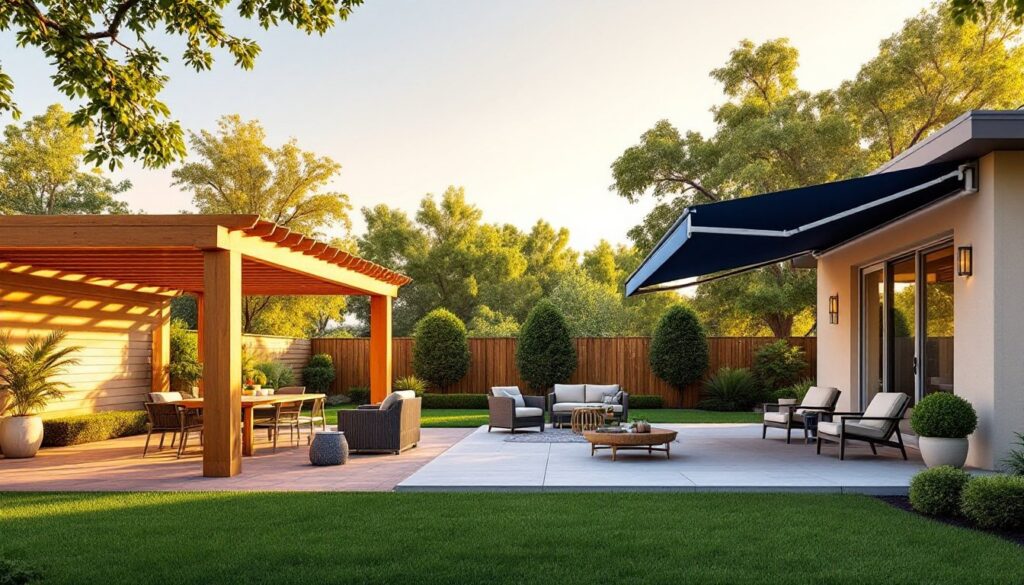
Pergolas remain a top choice for homeowners who want architectural interest without blocking sky views entirely. The open-lattice roof design allows partial sunlight and airflow while providing defined overhead structure. Standard pergola designs use 4×4 or 6×6 posts with 2×6 or 2×8 rafters spaced 12 to 24 inches apart.
Material options include pressure-treated pine (budget-friendly but requires regular staining), cedar or redwood (naturally rot-resistant with attractive grain), and vinyl or aluminum (low-maintenance but higher upfront cost). Composite lumber splits the difference, it resists rot and insects but costs more than treated wood.
Modern pergola kits often include options for retractable canopy inserts that slide along the rafters, giving homeowners control over shade levels. Some designs incorporate outdoor living elements like integrated lighting, privacy screens, or climbing plant supports.
Building a basic 10×12-foot pergola is a manageable weekend project for someone comfortable with a circular saw, drill, and post-hole digger. A miter saw speeds up angled cuts, and a laser level helps with post alignment. Footings typically require digging 12 to 18 inches below the frost line and setting posts in concrete or using galvanized post anchors bolted to a concrete pad.
Safety note: Wear safety glasses when cutting lumber and gloves when handling pressure-treated wood, which contains chemical preservatives.
Retractable Awnings for Flexible Shade Control
Retractable awnings give homeowners on-demand shade without the permanent footprint of a fixed structure. Modern motorized units extend and retract with a remote or smartphone app, and many include wind sensors that automatically retract the fabric in gusty conditions to prevent damage.
Fabric quality matters. Solution-dyed acrylic fabrics resist fading better than polyester and typically carry 5- to 10-year warranties. Look for fabrics rated UPF 50+ for maximum UV protection. Cheaper vinyl-coated fabrics crack and fade within a few seasons.
Most retractable awnings mount to the home’s fascia or exterior wall using lag bolts driven into solid framing or blocking. Wall-mounted installations work best on homes with adequate overhang clearance, typically 8 to 10 feet from the mounting point to the awning’s projected edge. Freestanding models use vertical posts for situations where wall mounting isn’t feasible.
Installation is straightforward for someone comfortable with a drill, level, and stud finder, though motorized units require access to an exterior GFCI outlet. If running new electrical, that portion requires compliance with NEC (National Electrical Code) and likely a permit.
Retractable awnings typically cost $500 to $3,500 depending on size and automation level. Manual crank units represent the budget end, while motorized awnings with wind sensors and smart home integration hit the higher range.
Solid Roof Covers: Maximum Protection and Durability
Solid-roof patio covers, sometimes called patio roofs or attached covers, provide full protection from rain, snow, and sun. These structures essentially extend the home’s roofline over the patio using similar roofing materials: asphalt shingles, metal panels, or polycarbonate sheets.
Structurally, solid covers require proper engineering. They tie into the home’s existing framing via a ledger board (typically a 2×8 or 2×10 lag-bolted through siding into rim joists or blocking), and the outer edge rests on 4×4 or 6×6 posts set in concrete footings. Rafters (usually 2×6 or 2×8 depending on span and snow load) run from the ledger to a beam supported by the posts. Rafter spacing follows standard framing practices, typically 16 or 24 inches on center.
Building codes are non-negotiable here. Attached roof structures almost always require permits and inspections. Engineers may need to review plans in areas with heavy snow loads or high winds. Incorrectly attached ledger boards are a common failure point and can pull away from the house under load.
Metal roofing (corrugated steel or aluminum) is popular for patio covers because it’s lightweight, sheds water efficiently, and comes in various colors. It also creates a drumming sound during rain, charming to some, annoying to others. Polycarbonate panels offer translucent coverage, allowing diffused light while blocking UV and rain. They’re ideal when homeowners want protection without creating a dark cave underneath.
For polycarbonate or metal panel installations, use specialized roofing screws with neoprene washers to prevent leaks. Overlap panels according to manufacturer specs, typically one or two corrugations, and ensure proper slope for drainage (minimum 1/4 inch per foot).
This is a project for experienced DIYers or professionals. Structural mistakes can compromise both the patio cover and the home’s existing roof.
Budget-Friendly DIY Patio Cover Ideas
Not every patio cover requires a four-figure budget or weekend-long construction. Several approaches deliver shade and style without extensive carpentry.
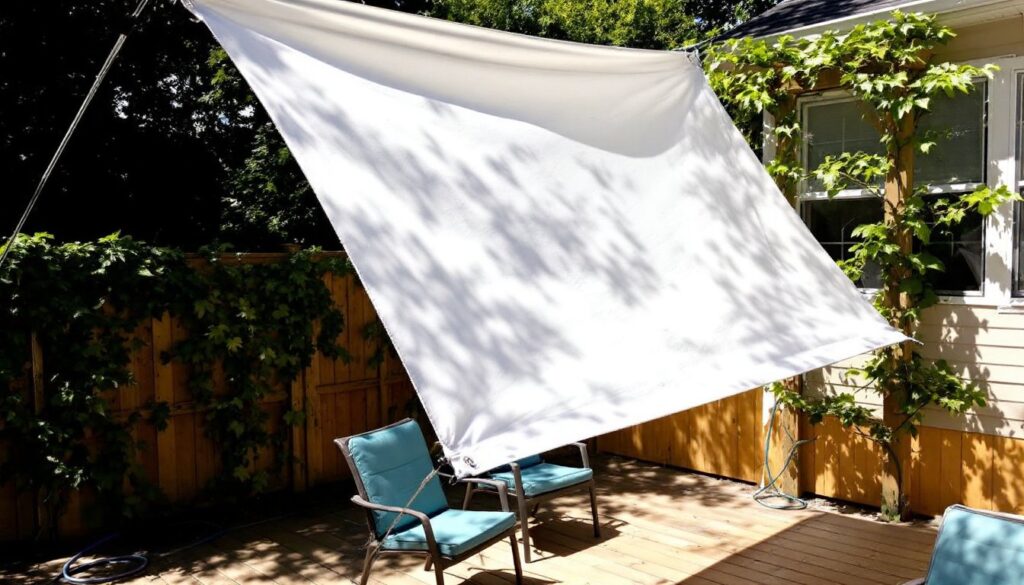
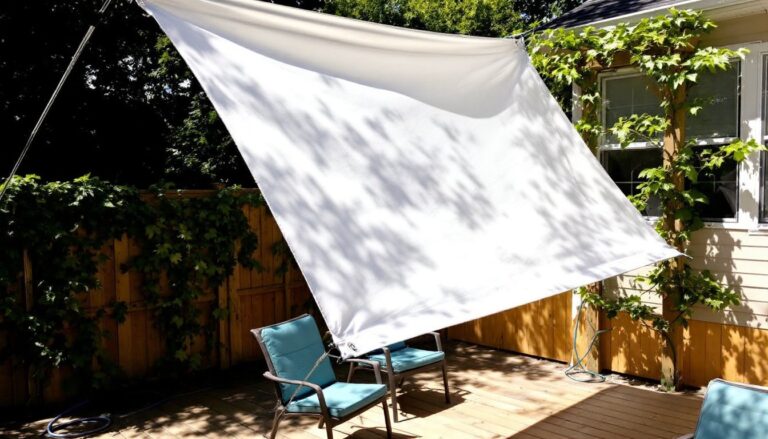
Sail shades are among the simplest options. These UV-resistant fabric triangles or rectangles attach to anchor points on the home, posts, or trees using stainless-steel hardware. They install in under an hour and cost $50 to $300 depending on size. Tension adjustment is critical, too loose and they sag and flap: too tight and the fabric tears. Most manufacturers recommend 15 to 20 degrees of angle to prevent water pooling.
Outdoor curtains or drop cloths hung from a simple frame create instant shade and privacy. Build a basic frame using 2×4 lumber and galvanized pipe or conduit as curtain rods. Canvas drop cloths (available at any paint supply store) work as budget outdoor curtains and typically cost $15 to $40 each. Treat them with water-resistant spray for added durability.
Bamboo or reed rolls offer natural aesthetics and reasonable sun blocking. Roll them out over an existing pergola frame or attach to a simple 2×4 structure. They’re lightweight, inexpensive ($30 to $100 for an 8×6-foot roll), and easy to replace. Lifespan is shorter than synthetic materials, expect two to four seasons depending on sun exposure and weather.
For patios surrounded by sturdy trees, a simple cable-and-post system can support climbing vines like wisteria or grape vines. The plants take a season or two to fill in, but the result is living shade that costs almost nothing beyond galvanized cable, turnbuckles, and eye bolts. This works best with creative outdoor design planning that incorporates greenery as functional architecture.
Repurposed materials can work too, old corrugated tin roofing, reclaimed lattice panels, or salvaged shutters all create interesting shade structures when mounted to basic frames. Just ensure any materials are clean, structurally sound, and safe for overhead use.
Choosing the Right Materials for Your Patio Cover
Material choice determines maintenance requirements, lifespan, and aesthetics. Here’s how common options stack up:
Wood remains the most versatile for DIY builds. Pressure-treated pine costs $8 to $15 per 2×6×8-foot board and holds up well with regular sealing (every two to three years). Cedar and redwood cost roughly double but resist rot naturally and age to attractive silver-gray if left untreated. Avoid using untreated pine or fir outdoors, it will rot within a few seasons.
Vinyl and PVC offer near-zero maintenance. These materials don’t rot, crack, or require painting, though they can become brittle in extreme cold and may yellow over time in intense sun. Vinyl pergola kits typically cost 30% to 50% more than comparable wood versions but save labor on long-term upkeep.
Aluminum works well for lightweight, corrosion-resistant structures. It’s common in prefab patio cover kits and pairs well with polycarbonate or fabric inserts. Aluminum won’t rust but can dent, and it lacks the warmth and texture of wood.
Polycarbonate panels come in clear, tinted, or opaque versions with varying levels of light transmission. Multiwall polycarbonate (with internal ribbing) provides better insulation than solid sheets and resists impacts. Expect to pay $2 to $5 per square foot depending on thickness (6mm to 16mm) and quality. Install panels with room for thermal expansion, they expand and contract significantly with temperature swings.
Fabric for awnings and shade sails should be solution-dyed acrylic or marine-grade polyester. Avoid bargain-bin polyester or untreated canvas, it fades and mildews quickly. Quality outdoor fabric costs $8 to $20 per yard but lasts five to ten years with minimal care.
When comparing materials, factor in total cost of ownership: initial expense plus maintenance over ten years. A vinyl pergola might cost more upfront but require zero staining or sealing. Pressure-treated wood costs less initially but needs regular maintenance to avoid rot and warping.
Climate considerations also matter. In wet regions, prioritize rot-resistant materials and ensure proper drainage and ventilation. In high-UV areas, choose fade-resistant finishes and fabrics. Snow-load regions require stronger framing and steeper roof pitches to shed accumulation.
Conclusion
The right patio cover balances budget, climate demands, and how the space gets used. Pergolas suit homeowners who want architectural style with partial shade, while solid roofs deliver year-round protection for true outdoor rooms. Retractable awnings and budget-friendly shade sails offer flexibility without permanent construction. Regardless of approach, investing in quality materials and proper installation, whether DIY or professional, ensures the structure performs well and looks good for years.