
Table of Contents
ToggleBrown has quietly become one of the most versatile bedroom colors, but it’s often underestimated. Too safe, some say. Too neutral. Yet when done right, brown bedrooms deliver warmth, depth, and a grounded elegance that white and gray can’t quite match. Whether someone’s aiming for a sun-drenched retreat in soft taupe or a cocoon-like sanctuary in espresso tones, brown offers flexibility across styles, from modern minimalist to rustic farmhouse. This guide walks through practical design strategies, color pairings, and material choices that transform brown from “safe” to standout.
Key Takeaways
- Brown bedroom ideas offer warmth and grounded elegance while functioning as a naturally calming, forgiving neutral that hides imperfections better than lighter tones.
- Light brown shades like taupe and greige work best in smaller bedrooms with layered textures, warm LED lighting (2700K-3000K), and natural wood furniture to prevent a bland appearance.
- Dark brown bedrooms require strategic lighting with at least three light sources and contrast with crisp white bedding or pale wood furniture to avoid feeling oppressive.
- Brown pairs exceptionally well with white (60/30/10 ratio) for timeless elegance or blue for calming contrast, with color distribution favoring one dominant shade over a 50/50 split.
- Texture is essential in brown bedroom design—mix wood species, incorporate leather or velvet accents, and layer natural fibers with metal finishes to create visual depth and prevent a flat, monochromatic look.
Why Brown Is the Perfect Color for Bedrooms
Brown works in bedrooms for reasons rooted in both psychology and design practicality. It’s a naturally occurring color, wood, stone, earth, so our brains process it as calming rather than stimulating. Unlike cooler tones that can feel clinical in north-facing rooms, brown adds warmth without the aggressive energy of red or orange.
From a design standpoint, brown acts as a neutral anchor. It pairs well with nearly every other color on the wheel, from crisp whites to jewel tones, without clashing. This makes it forgiving for homeowners who like to rotate accent pillows, artwork, or bedding seasonally.
Practically speaking, brown hides imperfections better than lighter neutrals. Minor wall scuffs, dust on baseboards, or the occasional coffee spill on a duvet blend into medium and dark browns more gracefully than they do with white or beige.
Brown also reflects light differently depending on undertones. Cool browns with gray bases feel contemporary and pair well with concrete, steel, and black accents. Warm browns with red or yellow undertones lean traditional and complement brass fixtures, leather, and reclaimed wood. Understanding which undertone fits the room’s existing architecture and light exposure is key to avoiding a muddy or mismatched result.
Light Brown Bedroom Ideas for a Soft, Airy Feel
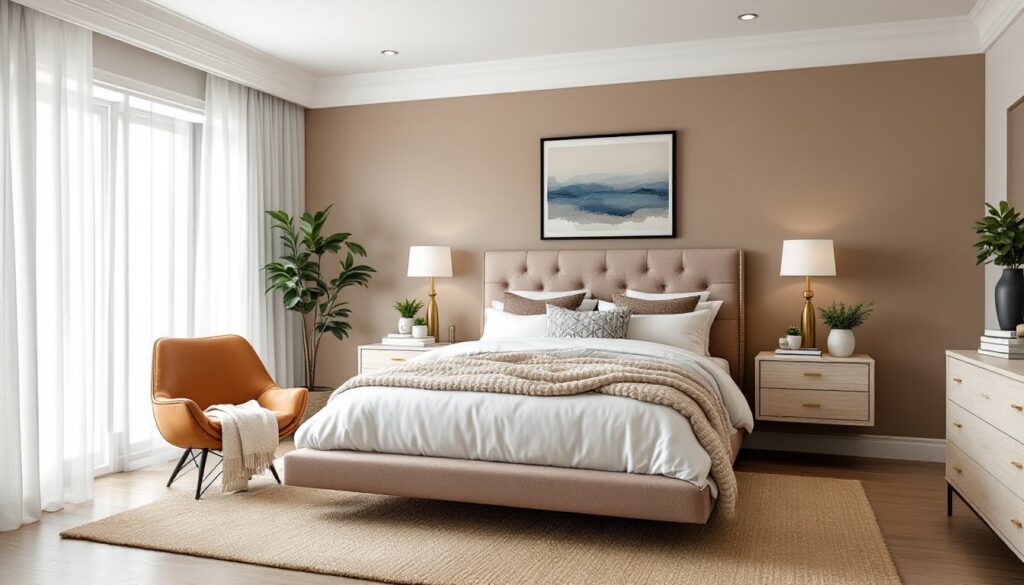
Light browns, taupe, sand, latte, greige, create a Scandinavian-meets-minimalist vibe when paired with natural materials and plenty of white space. These shades work especially well in smaller bedrooms or those with limited natural light, as they reflect ambient light better than darker tones.
Wall treatment matters here. A matte eggshell or satin finish in a warm taupe (think Benjamin Moore’s Revere Pewter or Sherwin-Williams Accessible Beige) keeps walls from feeling flat. Flat paint absorbs too much light in already dim rooms. For accent walls, consider a textured approach: shiplap in whitewashed oak or a light brown grasscloth wallpaper adds dimension without overwhelming the space.
Furniture in light brown bedrooms should lean toward natural wood tones, white oak, ash, or light walnut. Avoid orange-toned pine unless the goal is farmhouse rustic: it can clash with cooler taupes. A platform bed in white oak with visible grain keeps things contemporary, while a weathered wood bed frame leans coastal or cottage.
Layering is essential in light brown schemes to prevent them from reading as bland. Add texture through a chunky knit throw in cream, linen curtains with subtle slub weave, and a jute or sisal area rug. These elements introduce tactile interest without adding competing colors.
Lighting plays a supporting role. Swap cool white LED bulbs (5000K-6500K) for warm white (2700K-3000K) to enhance the cozy undertones of light brown. Brass or matte gold pendant lights add a touch of warmth without the heaviness of darker metals.
Rich Dark Brown Bedroom Designs
Dark brown bedrooms, espresso, chocolate, walnut, demand confidence and adequate lighting, but the payoff is a room that feels intentionally moody and luxurious. These shades work best in larger bedrooms with good natural light or in spaces where creating a cocoon effect is the goal.
Paint choice is critical. Dark colors show every surface imperfection, so walls need proper prep: fill nail holes with spackle, sand smooth with 120-grit sandpaper, and prime with a high-quality stain-blocking primer like Zinsser Cover Stain. Use a satin or semi-gloss finish in dark brown: it reflects just enough light to keep the room from feeling like a cave. Matte finishes absorb light and can make the space feel smaller.
Balance dark walls with lighter elements to prevent the room from feeling oppressive. Crisp white bedding, a light-colored upholstered headboard (linen or bouclé in cream), and sheer white curtains provide visual relief. Avoid heavy drapes in dark brown bedrooms unless blackout capability is a must, they’ll compound the darkness.
Wood furniture in dark rooms should contrast rather than blend. A white oak dresser or pale ash nightstand pops against espresso walls. If going monochromatic, vary the finish: pair matte walls with lacquered dark wood furniture to create depth through sheen variation.
Lighting in dark brown bedrooms requires layering. Rely on at least three light sources: overhead recessed lighting or a flush-mount fixture (avoid a single pendant that creates harsh shadows), bedside table lamps with warm bulbs, and a floor lamp in a corner. Dimmer switches are non-negotiable, they allow control over the room’s mood from energizing morning light to low evening ambiance.
For those drawn to modern interior design trends, incorporating metal accents in brushed nickel or matte black can modernize a dark brown palette.
Mixing Brown with Complementary Colors
Brown is a team player, but it needs the right partners to avoid looking dated or dull. Two pairings consistently deliver: brown with white and brown with blue. Each creates a distinct mood and works across multiple design styles.
Brown and White for Timeless Elegance
This is the classic pairing for a reason, it’s nearly impossible to mess up. White provides crispness and contrast that prevents brown from feeling heavy. The ratio matters, though. In classy brown bedroom decor, aim for a 60/30/10 split: 60% brown (walls, larger furniture), 30% white (bedding, trim, curtains), and 10% accent color or metallics.
Trim and molding painted in bright white (not cream or off-white) creates sharp definition against brown walls. It’s a small detail that elevates the entire room. Baseboards, crown molding, window casings, and door frames in semi-gloss white add architectural interest.
For furniture, a white upholstered bed with a tufted headboard contrasts beautifully with medium-to-dark brown walls. Pair with white oak or painted white nightstands to keep the palette clean. Avoid yellowish whites (like antique white) with cool-toned browns, they’ll clash.
Textiles in brown and white bedrooms benefit from pattern mixing. A brown duvet with white geometric or floral bedding, white linen curtains, and a patterned area rug in brown and cream keep the scheme from feeling too matchy. Natural fiber rugs (jute, seagrass) bridge the gap between brown and white without adding another color.
Brown and Blue for Calming Contrast
Blue and brown together create a naturally calming palette, think earth and sky or sand and ocean. This pairing works particularly well in bedrooms aiming for a serene, retreat-like feel. The key is choosing the right shade of blue.
Navy blue with warm brown creates a sophisticated, preppy look. Try chocolate brown walls with navy bedding and brass or gold accents. It’s a masculine-leaning palette but softens with cream or tan throw pillows.
Powder blue or sky blue with light brown (taupe, sand) feels coastal and airy. This works well in bedrooms with beach or cottage themes. White shiplap as an accent wall, light brown furniture, and soft blue textiles keep it light and breezy.
Teal or slate blue with medium brown leans modern. These cooler blues have enough gray to complement brown’s earthy base without feeling overly traditional. Pair with matte black metal accents (light fixtures, curtain rods) for contemporary edge.
When mixing brown and blue, distribute color thoughtfully. If walls are brown, bring in blue through bedding, an accent chair, or artwork. If walls are blue, anchor with brown furniture and wood flooring. Avoid a 50/50 split, one color should dominate. Inspiration from brown interior painting projects shows how layering these tones creates depth.
Textures and Materials That Enhance Brown Bedrooms
Brown’s success in a bedroom depends heavily on texture. A monochromatic brown room without varied materials looks flat and one-dimensional. Layering different textures creates visual interest and depth, even within a narrow color range.
Wood is the obvious starting point. Mix wood species and finishes rather than matching everything. A walnut bed frame, white oak nightstand, and reclaimed barn wood accent wall introduce tonal variation within the brown family. Avoid matchy-matchy bedroom sets, they’re dated and lack personality.
Leather adds richness and ages well in bedrooms. A leather bench at the foot of the bed or a leather-upholstered headboard in cognac or chocolate brown introduces a luxury element. Real leather develops patina over time: faux leather cracks and peels within a few years under regular use.
Linen and cotton provide soft contrast to harder materials. Linen bedding in warm brown tones has a lived-in, relaxed look that works in both modern and farmhouse settings. Pure linen wrinkles easily, so it’s best for a casual aesthetic. For crisper looks, opt for cotton percale or sateen in brown or complementary colors.
Velvet elevates brown bedrooms when used sparingly. A velvet throw pillow in caramel or a velvet accent chair in deep brown adds a touch of glam without overwhelming the space. Velvet catches light differently than matte fabrics, adding depth.
Natural fiber rugs, jute, sisal, seagrass, ground brown bedrooms and add organic texture underfoot. They’re durable and hide dirt well, making them practical for high-traffic bedrooms. For softness, layer a smaller sheepskin or faux fur rug beside the bed.
Metal accents provide necessary contrast against all the soft, organic tones. Brass or aged bronze fixtures (drawer pulls, light fixtures, curtain rods) warm up brown palettes. Matte black or brushed nickel cools them down and leans contemporary. Avoid mixing metal finishes haphazardly, pick one or two and stick with them throughout the room.
Wall texture adds another layer of interest. Options include tongue-and-groove paneling in stained wood, textured plaster for a European feel, or peel-and-stick wood planks as a budget-friendly DIY option. Always check manufacturer specs for moisture resistance if installing in humid climates.
For additional ideas on layering textures and materials, modern home decor inspiration offers galleries showing how designers balance warmth and visual interest in neutral-toned spaces. A well-executed brown bedroom uses at least three distinct textures per area: smooth painted walls, woven textiles, and natural wood create a baseline, then metal, leather, or stone add finishing touches.