
Table of Contents
ToggleBedroom design isn’t about trends, it’s about creating a space that truly feels like yours. Whether a homeowner is moving into her first grown-up apartment or ready to finally ditch the mismatched furniture from college, the bedroom deserves better than leftover decor and an afterthought palette. A sophisticated bedroom isn’t about expensive taste: it’s about intentional choices that prioritize comfort, function, and personal style. This guide walks through the essential elements and design approaches that help transform any bedroom into a retreat worth coming home to.
Key Takeaways
- Grown woman bedroom ideas prioritize intentional choices in comfort, function, and personal style over expensive decor or following trends.
- Quality bedding, including a supportive mattress and natural fiber sheets (Pima cotton or linen), forms the foundation of a sophisticated bedroom.
- A mature color palette uses one dominant neutral with a single accent color, paired with varied textures like wool rugs and velvet accents to add depth without visual chaos.
- Minimalist or romantic design styles work best for adult bedrooms, with closed storage and layered lighting creating spaces that reduce stress and support restful sleep.
- Thoughtful details—like blackout curtains for sleep quality, curved furniture to soften lines, and properly anchored artwork—transform a bedroom from an afterthought into a personal retreat.
Why Your Bedroom Deserves a Grown-Up Refresh
Most homeowners spend a third of their lives in the bedroom, yet it’s often the last room to get attention. Living rooms impress guests. Kitchens get remodeled. But the bedroom? It becomes a catch-all for laundry piles and furniture that didn’t fit anywhere else.
A grown-up bedroom refresh isn’t about following someone else’s aesthetic. It’s about creating a space that supports rest, reduces stress, and reflects who someone is now, not who she was at twenty. That means ditching the dorm-style poster frames, the sagging mattress, and the lighting that makes everything look like a waiting room.
The difference between a mature bedroom and a makeshift one comes down to editing. It’s knowing what to keep, what to upgrade, and what to let go. A cohesive color palette, quality bedding, and thoughtful lighting do more for a space than a dozen decorative pillows ever will. The goal isn’t perfection, it’s intention.
This type of refresh doesn’t require a contractor or a five-figure budget. It requires honest assessment: Does the furniture serve a purpose? Is the lighting adjustable? Is there a place for everything, or is clutter winning? Answering those questions is the first step toward a bedroom that actually works.
Essential Elements of a Sophisticated Bedroom
Investing in Quality Bedding and Textiles
Bedding is the foundation, literally. A quality mattress, supportive pillows, and breathable sheets make more difference than any decor upgrade. Mattresses should be replaced every 7–10 years, and if someone’s waking up sore or tired, it’s probably time.
Sheets matter more than most people think. Thread count isn’t the only measure of quality, fiber type and weave play a bigger role. Percale weaves feel crisp and cool: sateen weaves have a softer, silkier finish. Long-staple cotton (like Pima or Egyptian) resists pilling and gets softer with washing. Linen is another solid choice, especially in warmer climates, it’s naturally breathable and moisture-wicking, though it wrinkles easily.
Duvet covers should be machine-washable, and it’s worth having a second set on hand. Rotating bedding extends the life of textiles and makes laundry day less disruptive. Skip the decorative shams that never get used. If pillows aren’t functional, they’re clutter.
Layering textiles adds warmth without bulk. A lightweight quilt under a duvet works year-round. Throws at the foot of the bed provide extra coverage without overheating. Choose natural fibers when possible, synthetics trap heat and don’t breathe well.
Window treatments also fall under textiles, and they do more than look good. Blackout curtains or cellular shades improve sleep quality by blocking light and reducing noise. For renters or anyone avoiding drilling into trim, tension rods and clip rings work fine. If privacy isn’t an issue, sheer linen panels soften natural light without blocking it entirely.
Choosing a Mature Color Palette
Color sets the tone, and grown-up bedrooms tend to avoid the extremes. That doesn’t mean boring, it means deliberate. Neutrals like warm grays, soft taupes, and creamy whites create a calm foundation, while deeper tones like charcoal, navy, or forest green add richness without overwhelming the space.
A good rule: pick one dominant neutral and one accent color. The neutral covers walls, larger furniture, and bedding. The accent shows up in pillows, artwork, or a single upholstered piece. This approach keeps the room cohesive without feeling flat.
Matte and satin finishes read more sophisticated than high-gloss. For walls, eggshell or satin paint hides imperfections better than flat but doesn’t reflect light harshly like semi-gloss. Most bedrooms do well with a low-VOC or zero-VOC interior paint, which off-gasses less and improves air quality, especially important in a space meant for sleep.
Wood tones matter, too. Mixing finishes is fine, but keep them in the same temperature range. Warm woods (walnut, oak, cherry) clash with cool-toned grays. If the existing furniture skews warm, choose decor and textiles that complement rather than fight it.
Texture adds depth to a monochromatic palette. A wool rug, linen curtains, a velvet bench, or a chunky knit throw all contribute visual interest without adding color chaos. Incorporating modern design elements through varied textures keeps neutral palettes from feeling sterile.
Design Styles Perfect for the Modern Woman
Minimalist Serenity for Busy Lives
Minimalism works especially well in bedrooms because it removes visual noise. The fewer objects competing for attention, the easier it is to relax. This doesn’t mean living out of a suitcase, it means every item earns its place.
Start with furniture. A bed, nightstands, and a dresser cover the basics. Anything else should serve a clear function. A reading chair is great if it gets used. A decorative ladder holding blankets is clutter if those blankets never move.
Closed storage is key. Open shelving can work in living rooms, but bedrooms benefit from hiding the mess. Dressers with deep drawers, beds with built-in storage, or a simple wardrobe keep surfaces clear. If the room lacks closet space, a freestanding wardrobe (sometimes called an armoire) provides hanging and folded storage without a renovation.
Lighting in minimalist spaces should be intentional. Overhead fixtures with dimmers offer general illumination. Swing-arm sconces or adjustable reading lamps eliminate the need for bulky table lamps and free up nightstand space. Warm white bulbs (2700K–3000K) are easier on the eyes than cool daylight tones.
Color palettes stay simple: whites, grays, blacks, and natural wood. One accent color (rust, sage, blush) can appear sparingly. Artwork should be minimal, one large piece over the bed or a simple line drawing beats a gallery wall in a minimalist room.
Flooring plays a bigger role when there’s less to distract from it. If the existing floor is worn, an area rug in natural fiber (jute, sisal, wool) adds warmth and softens footsteps without breaking a tight budget. Rugs should extend at least 18 inches beyond each side of the bed for balance.
Romantic Elegance with Modern Touches
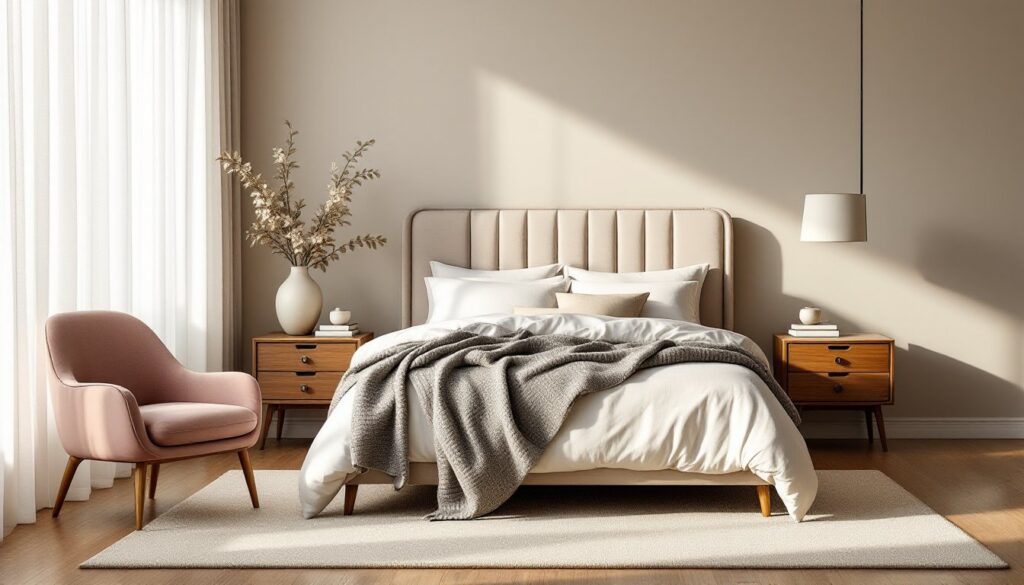
Romantic doesn’t mean frilly. Modern romantic design blends softness with structure, think curved lines, rich textiles, and a restrained palette. It’s about creating a space that feels indulgent without tipping into overdone.
The bed is the focal point. An upholstered headboard in velvet, linen, or bouclé adds instant sophistication. Tufted or channeled styles bring texture. For DIYers comfortable with basic carpentry, building a custom headboard from plywood and foam wrapped in fabric is doable over a weekend. Use high-density foam (at least 2 inches thick), wrap it in batting, then cover with upholstery fabric secured with a staple gun. Attach the finished panel to the wall with French cleats for a clean look.
Layered lighting is non-negotiable. A statement chandelier or pendant adds drama, but it should be paired with task lighting. Table lamps with fabric shades soften the light and add warmth. Dimmers on all fixtures allow flexibility, bright for cleaning, low for winding down.
Curved furniture softens the room. A round nightstand, an oval mirror, or a bench with curved legs breaks up the straight lines of the bed and dressers. These pieces don’t have to match perfectly, mixed metals (brass, matte black, aged bronze) add visual interest as long as they’re balanced across the room.
Textiles should feel luxurious. Velvet, silk, or faux fur throws provide tactile richness. Layered rugs (a smaller, plush rug over a larger natural fiber one) add dimension. For those seeking master bedroom design ideas that balance romance and function, focusing on high-quality textiles and statement lighting delivers results.
Mirrors amplify light and space but should be placed thoughtfully. A large leaning mirror (at least 65 inches tall) reflects natural light and makes the room feel larger. Avoid placing mirrors directly opposite the bed, some find it disruptive to sleep, and it’s a feng shui principle worth considering even if you’re not strict about it.
Color leans soft but saturated: dusty rose, deep plum, warm terracotta, or muted sage. Pair these with crisp whites or warm creams to keep the palette from feeling heavy. If painting an accent wall, choose the wall behind the bed, it grounds the space without overwhelming it.
Final touches come from intentional decor. A single vase with fresh or dried stems, a small stack of books, or a ceramic dish for jewelry keeps surfaces styled without clutter. Artwork should feel personal, original prints, framed textiles, or photography beat mass-produced canvases. Those looking for broader interior design inspiration can explore how small, curated touches elevate a room’s overall feel.
Safety note: When hanging heavy mirrors or artwork, always use appropriate wall anchors. Drywall alone won’t support more than a few pounds. For items over 20 pounds, locate studs with a stud finder and use wood screws directly into the framing, or use toggle bolts rated for the weight if studs aren’t in the right spot.