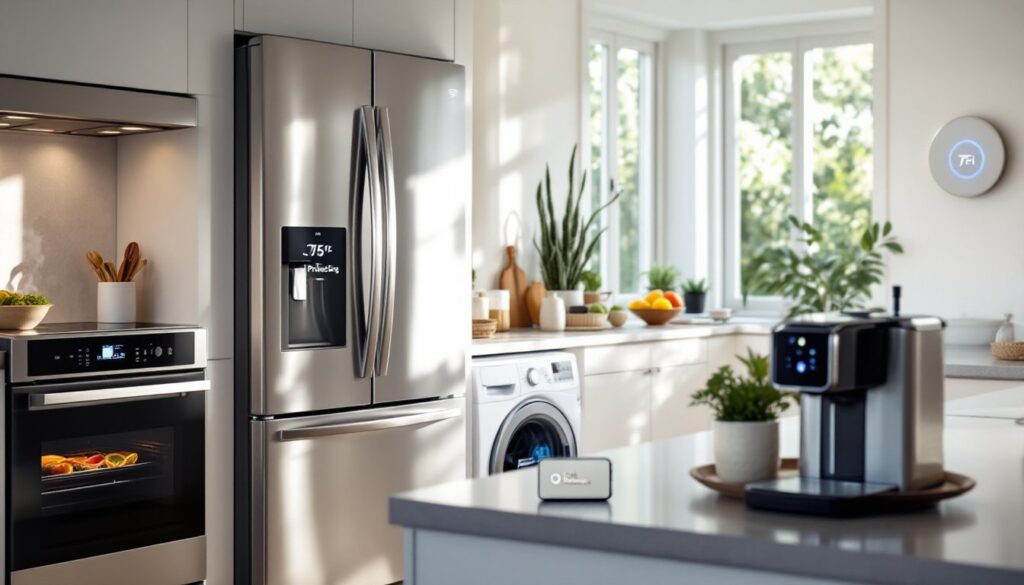

Table of Contents
ToggleThe smart home appliances market has exploded from niche tech curiosity to mainstream home improvement category. Homeowners aren’t just chasing gadgets, they’re investing in devices that genuinely reduce energy bills, simplify daily routines, and add measurable resale value. From refrigerators that track expiration dates to washing machines controlled from the grocery store parking lot, today’s connected appliances bridge convenience and efficiency. This guide breaks down what you need to know about the market, what’s actually selling, and what to watch for before you swap out that perfectly functional dishwasher for a Wi-Fi-enabled model.
Key Takeaways
- The smart home appliances market is projected to surpass $78 billion by 2027, with energy efficiency and convenience driving mainstream adoption beyond early adopter circles.
- Smart thermostats, refrigerators, and connected washers are the top-selling categories, delivering measurable savings of $130–$150 annually on heating and cooling alone.
- Compatibility standards like the Matter protocol and voice assistant integration (now in 50% of U.S. households) have made smart home appliances more accessible and practical for homeowners.
- Before purchasing, prioritize ecosystem compatibility, Wi-Fi stability, and long-term manufacturer support over premium features—many advanced functions hide behind monthly subscription fees.
- Smart appliances provide preventive maintenance alerts and usage insights that extend appliance lifespan and catch problems early, while also modestly boosting home resale value by 3–5%.
- Data privacy, electrical load capacity in older homes, and repairability of smart components deserve careful evaluation to avoid vendor lock-in and unexpected long-term costs.
What Are Smart Home Appliances and Why Do They Matter?
Smart home appliances are network-connected devices that communicate with your smartphone, voice assistant, or home automation hub. Unlike traditional appliances, they offer remote control, automation, and data tracking.
Think beyond novelty. A smart thermostat adjusts heating and cooling based on occupancy patterns, cutting HVAC costs by 10-23% annually according to EPA estimates. A connected washer sends alerts when the cycle finishes, preventing mildew from setting in on forgotten loads. A smart oven preheats on your commute home.
These devices rely on Wi-Fi, Bluetooth, Zigbee, or Z-Wave protocols to sync with ecosystems like Google Home, Amazon Alexa, or Apple HomeKit. Integration matters, if your fridge can’t talk to your grocery app or energy monitor, you’re paying for features you won’t use.
Why the sudden mainstream traction? Energy costs are up, compatibility standards have improved (Matter protocol launched in 2022), and installation has gotten simpler. Most plug-and-play models require only a stable router and a smartphone. No electrician, no custom wiring. That accessibility has pushed smart appliances from early-adopter territory into big-box retail aisles.
The Current State of the Smart Home Appliances Market
The global smart home appliances sector is projected to surpass $78 billion by 2027, growing at roughly 12% annually. North America and Europe lead adoption, but Asia-Pacific markets are accelerating due to urbanization and rising disposable income.
Market Size and Growth Trends
Smart kitchen appliances dominate revenue, accounting for nearly 40% of the category. Refrigerators, ovens, and coffee makers with app control and voice integration are the heavy hitters. Climate control devices, smart thermostats and connected HVAC systems, rank second, driven by utility rebate programs and efficiency mandates.
Washing machines and dryers with remote monitoring are climbing fast, especially in multi-family housing where laundry room access is limited. Robotic vacuums, while often categorized separately, fall under the smart appliance umbrella and continue strong double-digit growth.
What’s fueling this? Energy monitoring features appeal to cost-conscious homeowners. Real-time usage data from smart kitchen appliances helps identify power hogs and optimize run times during off-peak utility hours. Second, voice assistant adoption passed 50% of U.S. households in 2025, making hands-free appliance control a practical expectation rather than a gimmick.
Supply chain improvements post-2024 have stabilized pricing. Chip shortages that plagued earlier launches have eased, and major manufacturers now offer smart versions across price tiers, not just flagship lines.
Most Popular Smart Appliances Homeowners Are Buying
Sales data and consumer surveys point to a clear top tier. Here’s what’s moving off showroom floors and landing in real kitchens, laundry rooms, and living spaces:
Smart thermostats remain the gateway device. Models from Nest, Ecobee, and Honeywell offer geofencing, learning algorithms, and utility integration. Installation is straightforward if you have a C-wire (common wire) for continuous power: older homes may need a power adapter kit or professional install.
Smart refrigerators with internal cameras, touchscreen interfaces, and inventory tracking appeal to families managing meal planning. Cameras let you check contents from the store, reducing duplicate purchases. Expect to pay $2,000–$4,500 depending on capacity and feature set.
Connected ovens and ranges allow remote preheat, temperature monitoring, and recipe-guided cooking. Brands like GE, Samsung, and Bosch integrate with apps that send alerts when preheating finishes or when a dish hits target temp. Safety interlock features prevent accidental remote ignition, usually requiring manual confirmation before the oven fires up.
Wi-Fi-enabled washers and dryers notify you when cycles complete and allow remote start (handy if you’re on time-of-use utility rates). LG and Samsung dominate this segment. Load-sensing tech adjusts water and detergent automatically, reducing waste.
Smart dishwashers monitor soil levels and adjust cycle length, saving water and energy. Leak detection alerts can prevent costly water damage, especially valuable if the dishwasher is on an upper floor.
Robotic vacuums and mops, often grouped with smart home devices, use LIDAR or camera navigation to map floor plans and schedule cleaning. Models with self-emptying bases reduce maintenance to once a month.
Key Benefits of Investing in Smart Home Appliances
Let’s cut through the marketing. Smart appliances deliver tangible value in three areas: energy savings, convenience, and diagnostics.
Energy efficiency and cost reduction top the list. Smart thermostats alone can save $130–$150 annually on heating and cooling. Connected water heaters adjust temperature based on usage patterns, trimming standby losses. Energy Star–certified smart appliances often qualify for utility rebates, sometimes covering 10–20% of purchase cost.
Remote control and automation eliminate friction. Preheat the oven on your way home. Start the dishwasher during off-peak hours from bed. Pause the dryer if you forgot to add fabric softener. These aren’t luxuries if you’re juggling kids, work, and a home reno, they’re time savers.
Usage insights reveal inefficiencies you didn’t know existed. A smart washer might flag that you’re using too much detergent, causing residue buildup and longer rinse cycles. A smart fridge can alert you to a failing door seal before your energy bill spikes.
Preventive maintenance alerts catch problems early. A washer vibrating off-balance or a dryer vent getting clogged triggers notifications. Addressing these before failure extends appliance lifespan and prevents emergency service calls. Diagnostic codes sent to your phone help techs troubleshoot remotely, reducing truck rolls and service fees.
Home resale value sees a modest lift. A 2025 survey found that homes with integrated smart systems sold 3–5% faster than comparable non-connected properties. Younger buyers especially expect smart infrastructure as standard, much like central air or granite counters became baseline expectations in earlier decades.
Integration with home monitoring systems adds a security dimension. Connected cameras and sensors on appliances can detect unusual activity, like a stove left on or a freezer door ajar, and send alerts or trigger automated shutoffs.
What to Consider Before Purchasing Smart Appliances
Smart doesn’t always mean better. Here’s what to evaluate before pulling the trigger.
Compatibility and ecosystem lock-in matter more than specs. If you’re deep into the Google ecosystem, an appliance that only works with Alexa creates friction. Check for Matter protocol support, it’s the new cross-platform standard designed to reduce vendor lock-in. Older devices may require brand-specific hubs.
Wi-Fi requirements can’t be ignored. Most smart appliances need a 2.4 GHz network (5 GHz isn’t widely supported). Weak signal in the laundry room or kitchen means dropouts and failed commands. Consider a mesh router system or Wi-Fi extender before investing in a fleet of connected devices.
Subscription fees are creeping into appliance features. Some brands lock advanced functions, like remote start or detailed energy reports, behind monthly fees. Read the fine print. A $30/year subscription eats into those energy savings fast.
Repairability and parts availability become concerns with connected devices. A failed Wi-Fi module or touchscreen can sideline an otherwise functional appliance. Ask about parts availability and warranty coverage for smart components specifically. Some manufacturers offer extended warranties on electronics separate from mechanical parts.
Data privacy deserves attention. Smart appliances collect usage data, often uploading it to manufacturer servers. Review privacy policies to understand what’s tracked, where it’s stored, and whether it’s sold to third parties. Opt out of data sharing if possible, though some features may require cloud connectivity.
Installation complexity varies. Plug-and-play models are easy. Hardwired appliances like ranges, ovens, or water heaters may need an electrician to ensure proper voltage and grounding, especially if you’re upgrading from a standard to a smart model. Budget $100–$300 for professional install if you’re not confident working with 240V circuits.
Lifespan vs. technology obsolescence is the tough calculus. A quality appliance should last 10–15 years, but will the app still be supported in 2036? Manufacturers sunset software regularly. Prioritize devices with strong track records for long-term updates. If the smart features fail, can the appliance still function manually?
Electrical load and circuit capacity can be an issue in older homes. Adding multiple smart devices to a single circuit may trip breakers. Consult your breaker panel and consider having an electrician assess capacity if you’re planning a whole-home smart upgrade. This is especially relevant with high-draw appliances like ranges, dryers, and water heaters.
Finally, consider used or refurbished options carefully. Smart appliances often can’t be factory reset completely, and previous owners’ accounts may linger in firmware. Stick with certified refurbished units from the manufacturer to avoid headaches.
Conclusion
Smart home appliances have moved beyond early-adopter experiments into practical, cost-effective home upgrades. The market’s growth reflects real demand for energy savings, convenience, and better home management tools. Whether you start with a smart thermostat or jump into a full connected kitchen, focus on compatibility, long-term support, and honest assessment of which features you’ll actually use. The right smart appliance solves a problem. The wrong one is just an expensive gadget with an app you’ll forget to open.