
Table of Contents
ToggleCreating comfortable outdoor living space doesn’t require a $5,000 pergola or a contractor’s number on speed dial. With summer temperatures pushing patios into the unusable zone by mid-morning, homeowners need shade solutions that work now, not after months of saving or waiting on installation crews. The good news? Materials sitting in garages, growing in nurseries for under $20, and basic hardware store supplies can deliver real relief from direct sun. These budget-friendly approaches use sweat equity instead of checkbook equity, turning afternoons spent sweating into afternoons spent actually enjoying the deck.
Key Takeaways
- Budget-friendly patio shade ideas using canvas drop cloths, repurposed fabrics, and basic hardware can reduce surface temperatures by 10–15°F and extend outdoor furniture life by 2–3 years without the $2,000–$8,000 cost of professional installations.
- Fast-growing vines like wisteria, climbing roses, and grapevines create living shade canopies that improve over time and deliver multiple benefits—from privacy to edible crops—when trained on simple structures like cattle panels or pergolas.
- Pallet wood spaced 2–4 inches apart, corrugated metal roofing panels, and repurposed bamboo fencing provide durable overhead coverage for $5–$25 per project component while offering weather protection and adjustable shade options.
- Fabric-based solutions like sailcloth and outdoor curtains require proper angling (15–20 degrees) and secure mounting with eye bolts and turnbuckles to prevent water pooling and wind damage.
- Container-grown clumping bamboo and living plants deliver portable shade solutions ideal for renters, condo owners, and anyone testing patio shade layouts before committing to permanent structures.
- Always check local building codes before installation, as attached structures or deep footings may require permits, but most freestanding shade structures under 120 square feet typically do not.
Why Budget-Friendly Patio Shade Matters for Your Outdoor Space
Unshaded outdoor spaces sit empty during peak daylight hours, wasting square footage that homeowners already paid to build or maintain. Surface temperatures on concrete or composite decking can exceed 140°F in direct sun, making barefoot traffic impossible and turning patio furniture into branding irons.
Beyond comfort, UV exposure fades cushions, dries out wooden furniture, and degrades outdoor fabrics within a single season. Even budget outdoor sets benefit from overhead protection that extends their usable life by 2-3 years.
Professional shade structures, retractable awnings, aluminum pergolas, or permanent roof extensions, typically run $2,000 to $8,000 installed, and that’s before accounting for permits in jurisdictions where permanent structures require approval. For renters, condo owners with HOA restrictions, or anyone testing layouts before committing to permanent construction, temporary and low-cost solutions provide immediate relief without long-term financial or structural commitments.
Budget approaches also allow experimentation. A $200 canvas canopy can be repositioned, removed in winter, or replaced entirely if shade needs change, flexibility that permanent construction can’t match.
DIY Fabric and Canvas Shade Solutions
Fabric-based shade delivers the highest coverage-to-cost ratio of any DIY approach. The key is selecting materials that handle moisture and UV without constant replacement.
Drop Cloth and Sailcloth Canopies
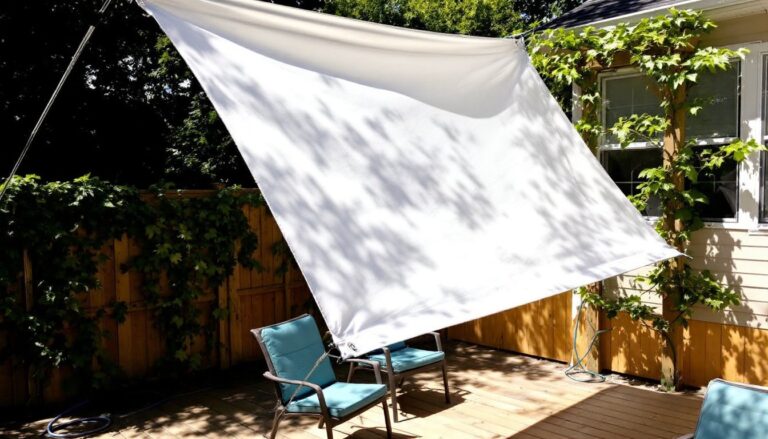
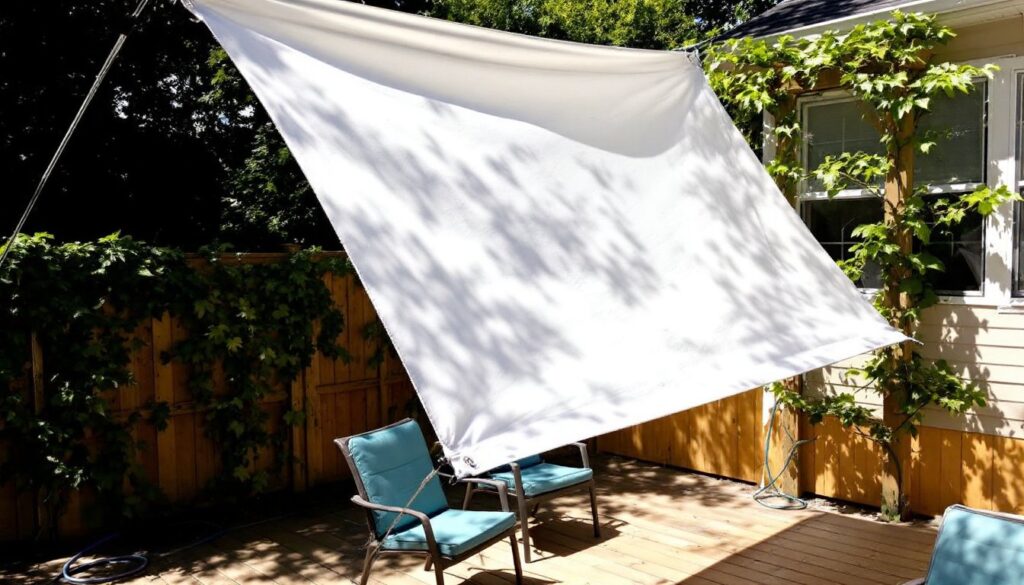
Canvas drop cloths from paint supply stores offer surprising durability as shade material. A 9×12-foot canvas drop cloth costs $15-$25 and provides enough coverage for a small seating area. Look for 10-12 oz weight canvas, lighter versions sag and tear in wind.
Installation requires only eye bolts, turnbuckles, and paracord or galvanized cable. Mount eye bolts into house fascia, fence posts, or dedicated 4×4 posts set in concrete. Run cable through grommets at cloth corners (add grommets with a $12 grommet kit if the drop cloth lacks them), and tension with turnbuckles.
Angle the fabric 15-20 degrees for water runoff, flat installations collect water and stretch the material. For multi-panel coverage, overlap edges by 8-12 inches and use grommets and zip ties to join sections.
Sailcloth (actual marine-grade fabric, not the decorative name for textured cotton) handles weather better than drop cloth but costs more, expect $3-$5 per square foot from fabric suppliers. The investment pays off in longevity: quality sailcloth resists mildew, sheds water, and maintains tension for 5+ years outdoors.
Triangle and rectangle shade sails work well over irregular patio shapes where traditional canopies don’t fit. Mount opposing corners at different heights (minimum 12-inch drop) to create natural drainage. For patio designs that incorporate budget-friendly materials and planning, fabric canopies can be staged during initial construction to integrate mounting points.
Repurposed Curtains and Sheets
Outdoor curtain panels meant for covered porches cost $40-$80 per panel. Repurposed indoor curtains or flat sheets cost $0-$10 at thrift stores and provide identical function, they just won’t last as long.
Look for polyester or poly-blend fabrics. Cotton holds moisture and mildews within weeks outdoors. Blackout-lined curtains offer better UV protection than sheers but add weight that requires sturdier hanging hardware.
Install using galvanized pipe and floor flanges mounted to overhead joists or beams. A 10-foot run of 3/4-inch galvanized pipe costs under $15 and supports curtain weight better than tension rods. Use shower curtain rings or clip rings for easy removal during storms or winter.
For freestanding shade, build a simple frame from 2×2 lumber and hang curtains on three sides, leaving one open for entry. Anchor the frame with concrete deck blocks or sandbags, freestanding structures catch wind and will topple without weight.
Safety note: Fabric near grills or fire pits is a fire hazard. Maintain at least 3 feet of clearance from open flames, and never use lightweight synthetic fabrics (polyester, nylon) near heat sources, they melt rather than burn and can drip flaming material.
Natural and Living Shade Options
Plants provide shade that improves over time rather than degrading, and initial costs rival or beat fabric solutions.
Fast-Growing Vines and Climbing Plants
Vines transform simple overhead structures into living shade canopies. The structure itself can be minimal, vines don’t need the load-bearing capacity required for solid roofing.
Wisteria grows 10+ feet per season in full sun and produces dense overhead coverage within two years. It’s aggressive, requires annual pruning, and will damage weak structures, build supports from 4×4 posts and 2×6 crossbeams, not lightweight lattice. Wisteria weight on mature vines can exceed 100 pounds, and the twining stems crush anything under 1-inch diameter.
Climbing roses offer faster initial coverage with less structural demand. Varieties like ‘New Dawn’ or ‘Zephirine Drouhin’ reach 12-15 feet in two seasons and tolerate partial shade. Train them on cattle panel arches ($25-$35 per 16-foot panel) anchored to rebar driven 18 inches into the ground.
Hops (Humulus lupulus) explodes in spring, covering trellises by June and dying back in fall. It’s ideal for seasonal shade where winter sun is welcome. Hops grow on virtually any vertical surface and require no special structure, even twine strung between posts works.
Grapevines deliver edible crops alongside shade. Table grape varieties like ‘Concord’ or ‘Niagara’ establish quickly and produce fruit by year three. Build a simple pergola frame using 4×4 pressure-treated posts (8 feet above grade) and 2×6 runners spaced 16-24 inches on center. Grapevines need annual pruning, neglected vines turn into tangled overhead jungles.
For all vines, drip irrigation or soaker hoses placed at the base reduce maintenance. Vines transpire heavily during summer: inconsistent watering leads to leaf drop and sparse coverage exactly when shade is needed.
Container-grown bamboo creates portable shade screens. Clumping varieties (not running types, which escape and invade) in large containers (25+ gallons) grow 8-12 feet tall and form dense screens within one season. Expect to spend $50-$80 per plant for gallon-sized starts: they’ll fill a 25-gallon container in one season. Position containers on the sun-facing side of seating areas for afternoon shade.
Many home gardening and design strategies incorporate living shade elements that double as visual interest and privacy screening.
Upcycled and Reclaimed Materials for Overhead Coverage
Salvaged materials often outperform new budget products in durability and aesthetics, the key is knowing what to look for and what to avoid.
Pallet wood appears in every DIY article, but it’s genuinely useful here. Disassemble pallets (look for heat-treated “HT” stamps, not chemically treated “MB” wood) and use the boards as overhead slats spaced 2-4 inches apart. This creates 50-60% shade, enough to drop temperatures 10-15°F without blocking all light.
Build a simple frame from 2×4 lumber spanning between posts or mounted to ledger boards on house fascia. Attach pallet boards perpendicular to the 2×4 frame using 2.5-inch deck screws. For adjustable shade, hinge sections to open and close as sun angles change.
Corrugated metal roofing panels from salvage yards or leftover from roofing jobs provide waterproof coverage. A 26-inch × 12-foot panel weighs about 12 pounds and costs $10-$25 new, used panels run $5-$15. Mount panels to a 2×4 frame using 1.5-inch metal roofing screws with neoprene washers spaced every 2 feet.
Angle the roof at least 1:12 pitch (1 inch of drop per foot of run) for water drainage. Overlap panel edges by one corrugation and seal with lap sealant to prevent leaks. Metal roofs create noise during rain, a feature, not a bug, for many people, but worth considering if the patio is under a bedroom window.
Bamboo fencing rolls, often discarded after a single season by landscaping projects, make excellent overhead screening. Unroll the fencing and attach it to a simple frame using zip ties or wire. Bamboo degrades in 3-5 years outdoors but costs nearly nothing when sourced from neighbors upgrading their fencing.
Old vinyl blinds can be repurposed as adjustable shade slats. Mount blinds sideways (slats running front-to-back instead of side-to-side) to overhead frames. The tilt mechanism still functions, allowing angle adjustments as the sun moves. This works best under covered porches where the blinds have some weather protection.
Shade cloth isn’t technically reclaimed, but it’s worth mentioning as a budget baseline. Agricultural shade cloth costs $0.30-$0.60 per square foot and comes in densities from 30% to 90% coverage. The 50-60% range works well for patios, enough shade to matter, enough light to see. Attach shade cloth to frames using UV-resistant zip ties or lacing cord through grommets.
For regional outdoor living ideas and design inspiration, particularly for covered porches and patio layouts common in warm climates, shade integration is a recurring design element worth studying.
Permit and code note: Freestanding structures under 120 square feet typically don’t require permits in most jurisdictions, but attached structures, anything with footings deeper than 12 inches, or permanent roof connections often do. Check local requirements before mounting to the house or pouring concrete.