
Table of Contents
ToggleA double sink vanity can transform a cramped morning routine into a seamless experience. When two people need to brush teeth, wash faces, or get ready simultaneously, a single sink becomes a bottleneck. Beyond convenience, a well-chosen double vanity adds resale value and visual impact to a master bathroom. But selecting the right design involves more than aesthetics, it requires understanding spatial requirements, plumbing considerations, and storage needs. This guide walks through practical ideas and technical details to help homeowners make informed decisions about vanity styles, layouts, and configurations that work.
Key Takeaways
- A double sink vanity eliminates bathroom bottlenecks for couples and multi-person households while providing 30-36 inches of dedicated counter space per user.
- Modern floating vanities create an airy feel and easier floor cleaning, but require solid wall blocking and 2×8 or 2×10 framing to safely support stone countertops and undermount sinks.
- Double sink vanity layouts require a minimum 60-inch width (72 inches is more comfortable), sinks spaced 30+ inches apart, and compliance with IRC clearance codes for floor space and distance from walls.
- Farmhouse-style double vanities offer timeless appeal and ample storage but demand plywood construction with quality finishes to resist bathroom humidity and moisture damage.
- Strategic storage solutions including drawer dividers, pull-out trays, vertical dividers, and recessed niches maximize functionality while preventing clutter in a double sink vanity setup.
- Master bathrooms with double sinks appeal to homebuyers and rank high on buyer wish lists, making them a competitive advantage in real estate value.
Why Choose a Double Sink Vanity for Your Master Bathroom
The primary advantage is function: two sinks eliminate bathroom conflicts during peak hours. For couples or households with multiple people sharing a bathroom, this isn’t a luxury, it’s a sanity saver.
Double vanities also provide dedicated counter space for each user. Instead of crowding toothbrushes, skincare products, and grooming tools around a single basin, each person gets roughly 30-36 inches of personal workspace. That’s enough room for a countertop organizer, a tray for daily essentials, and elbow room while washing up.
From a resale perspective, master bathrooms with double sinks appeal to buyers. Real estate agents consistently note that dual-sink configurations rank high on buyer wish lists, particularly in homes with 3+ bedrooms. While it won’t guarantee a higher sale price, it does make the home more competitive in its market segment.
There’s a structural consideration, too: installing a double vanity requires adequate wall space (minimum 60 inches, though 72 inches is more comfortable) and access to plumbing. If the existing drain and supply lines are centered on a single sink, relocating them involves opening walls and potentially rerouting vents. That’s not a DIY-friendly task unless someone has plumbing experience and the proper permits. Most jurisdictions require a licensed plumber for drain relocations and fixture rough-ins, so budget accordingly.
Finally, double vanities create visual balance. A long, low vanity anchors the room and draws the eye horizontally, making the bathroom feel wider. Pair it with a large mirror or two individual mirrors, and the effect is cohesive and intentional.
Popular Double Sink Vanity Styles to Consider
Choosing a vanity style depends on the bathroom’s architecture, the homeowner’s taste, and the level of maintenance they’re willing to handle. Here are two styles that dominate current design ideas and offer distinct benefits.
Modern Floating Vanities
Floating vanities mount directly to wall studs, leaving the floor visible beneath. This creates an airy, open feel, especially useful in smaller master baths where a floor-to-ceiling vanity would feel heavy.
Pros:
- Easier to clean floors (no base cabinet to mop around)
- Visually expands the room
- Works well with radiant floor heating or tile that’s worth showing off
Cons:
- Requires solid blocking or backing during installation: drywall anchors won’t support the weight of a stone countertop and two undermount sinks
- Less storage than a floor-standing unit of the same width
- Plumbing is more exposed, so supply lines and P-traps need to be neat or concealed with a decorative panel
Installation tip: Use 2×8 or 2×10 blocking between studs at the mounting height (typically 32-34 inches to the top of the counter). Secure the vanity with 3-inch cabinet screws into the blocking. If the existing wall framing isn’t adequate, opening the wall and adding blocking is necessary, this is structural, so it’s not optional.
Floating vanities pair well with vessel sinks or integrated countertops. Choose quartz or solid-surface materials for the counter: they’re durable, non-porous, and don’t require sealing like natural stone.
Rustic and Farmhouse-Inspired Designs
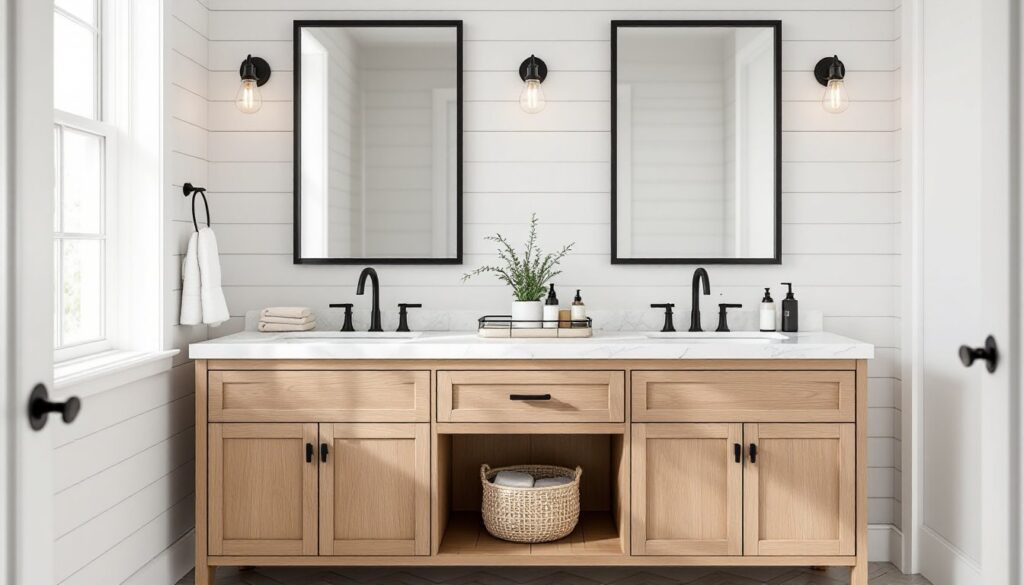
Farmhouse vanities typically feature shaker-style doors, apron-front or vessel sinks, and finishes in weathered wood, painted white, or distressed gray. The look is warm, approachable, and pairs well with subway tile, shiplap, or beadboard accents.
Pros:
- Timeless aesthetic that doesn’t feel trendy
- Often includes ample cabinet and drawer storage
- Hides plumbing completely
- Can be custom-built or modified from stock cabinetry
Cons:
- Wood vanities require sealing or paint to withstand bathroom humidity: untreated wood will warp or develop mold
- Heavier and harder to move once installed
- Requires careful attention to toe-kick height and door clearance if the floor isn’t level
Material note: If building or buying a wood vanity, specify plywood construction with dovetail or doweled drawer boxes. Particle board or MDF cores will swell and fail in a bathroom environment, even with a good finish. For countertops, farmhouse styles look sharp with butcher block (if properly sealed with food-safe mineral oil or polyurethane), marble, or concrete.
Many bathroom remodels now incorporate open shelving beneath one section of the vanity for towels or baskets, adding function without sacrificing the farmhouse look.
Smart Layout and Sizing Tips for Double Sink Vanities
Getting the dimensions right prevents buyer’s remorse and expensive rework. Start with clearances: the International Residential Code (IRC) recommends at least 30 inches of clear floor space in front of the vanity and 15 inches from the center of each sink to any side wall or obstruction.
Here’s the breakdown:
- Minimum vanity width: 60 inches (tight, but functional for two undermount sinks)
- Comfortable width: 72 inches (allows 36 inches per user)
- Luxury width: 84+ inches (provides generous counter space and storage)
Sink spacing: Place sinks at least 30 inches apart (center to center). This gives each user elbow room and prevents splashing into the neighboring basin. For vanities 72 inches or wider, 36-inch spacing is ideal.
Depth: Standard vanity depth is 21-22 inches, but if space allows, a 24-inch depth adds counter real estate without compromising walkways. Check that the vanity doesn’t interfere with door swings, toilet placement (minimum 15 inches from center of toilet to any obstruction), or shower entry.
Height: Traditional vanity height is 30-32 inches, but comfort height vanities at 36 inches are increasingly common and reduce back strain for taller users. This matches standard kitchen counter height and pairs well with vessel sinks, which add another 4-6 inches.
Plumbing rough-in: If installing a new vanity, verify that drain locations align with the sink bowls. Drains should be 12-16 inches from the side walls and centered under each basin. Supply lines (hot on the left, cold on the right) should be 18-20 inches above the finished floor and 4 inches apart. If relocating plumbing, consult local codes, some jurisdictions require venting changes or inspections.
Electrical considerations: Plan for GFCI-protected outlets on either side of the vanity (or in the center if the design allows). Code typically requires receptacles within 36 inches of the outside edge of each sink. If adding outlets, hire a licensed electrician: bathrooms are wet locations, and improper wiring is a shock hazard.
Storage Solutions to Maximize Your Vanity Space
A double vanity eats up linear wall space, so the storage inside needs to work efficiently. Poor cabinet layout leads to wasted depth, cluttered counters, and daily frustration.
Drawer dividers and organizers: Install adjustable drawer dividers for makeup, hair tools, and skincare. Shallow drawers (3-4 inches tall) work well for small items: deeper drawers (8-10 inches) accommodate hair dryers, brushes, and bulk supplies. Some vanities offer peg systems or modular inserts, worth the upgrade if the budget allows.
Pull-out trays and lazy Susans: Base cabinets under sinks are notoriously awkward due to plumbing. Use pull-out trays or U-shaped organizers that fit around P-traps. A lazy Susan works for bottles and cleaning supplies but skip it if the cabinet is too shallow (less than 18 inches deep).
Vertical dividers for hair tools: A narrow vertical divider (2-3 inches wide) mounted to the inside of a cabinet door holds flat irons, curling wands, and brushes. Keeps cords tidy and tools accessible.
Open shelving or niches: If the vanity design includes open lower shelving, use woven baskets or fabric bins to corral towels and toiletries. For a cleaner look, build a shallow recessed niche (3-4 inches deep) between studs in the wall above the counter. Frame it out with 2x4s, line it with cement board and tile, and use it for daily-use items like soap, lotion, or a small plant.
Medicine cabinets or mirrors with storage: Pair the vanity with recessed medicine cabinets above each sink. Standard depth is 3.5 inches (fits between studs), which is enough for medications, contact lenses, and grooming tools. Surface-mount cabinets add 6-8 inches of depth but protrude into the room.
Toe-kick drawers: Some custom vanities include shallow drawers in the toe-kick space (the recessed area at floor level). These are 3-4 inches tall and useful for flat items like scales, bath mats, or extra washcloths. Not a stock option, but a skilled carpenter or cabinet maker can add them.
Avoid these mistakes:
- Don’t skimp on soft-close hinges and slides. Bathrooms see heavy daily use: cheap hardware fails within a year.
- Don’t overlook drawer weight ratings. Stone countertops and undermount sinks add significant weight. Use full-extension slides rated for 75-100 lbs per drawer.
- Don’t ignore ventilation. Cabinets trap moisture. If the vanity has doors, leave them open occasionally or install a small battery-powered moisture absorber inside.
Conclusion
A double sink vanity delivers both practical function and long-term value when sized and styled correctly. Measure carefully, plan for plumbing and electrical needs, and choose materials that can handle daily moisture exposure. Whether leaning toward a sleek floating design or a classic farmhouse build, the key is matching the vanity to the room’s dimensions and the household’s routines. For more inspiration on layouts and finishes, exploring design platforms can help refine ideas before committing to materials.