
Table of Contents
ToggleBrick fireplaces anchor a room, but dated orange or red brick can drag down an entire space. Painting brick isn’t just a cosmetic fix, it’s a practical way to modernize a fireplace, blend it with updated interiors, or turn it into a statement feature. The commitment is real, though. Once painted, reversing the process is expensive and labor-intensive, so planning and execution matter. Whether aiming for a crisp white backdrop, a moody charcoal focal point, or a textured limewash finish, the right approach makes the difference between a professional-looking transformation and a project that screams “regret.”
Key Takeaways
- Painting a brick fireplace modernizes dated orange or red brick while disguising minor damage like mortar cracks and discoloration, making it a cost-effective alternative to full remodeling.
- Once painted, reversing the process is expensive and labor-intensive ($5–$15 per square foot professionally), so commitment to the design long-term is essential before starting a painted brick fireplace project.
- White remains the most popular painted fireplace color for brightening dark spaces, while bold colors like charcoal, navy, and forest green create dramatic focal points that require proper ambient lighting for balance.
- German schmear and limewash finishes offer textured, breathable alternatives to solid paint coverage, with limewash being ideal for older homes prone to condensation but costing more ($40–$70 per gallon).
- Proper primer application is mandatory—use a stain-blocking masonry primer with a 3/4-inch nap roller to prevent tannin bleed and poor adhesion, followed by two coats of topcoat for full, even coverage on the brick’s porous surface.
Why Paint Your Brick Fireplace?
Most homeowners paint brick fireplaces to solve a design mismatch. Eighties-era orange brick or heavily sooted red brick clashes with contemporary grays, whites, and neutrals. A fresh coat unifies the space without the cost of a full remodel.
Paint also conceals damage. Minor mortar cracks, efflorescence (that white, chalky residue), and discoloration disappear under primer and topcoat. For non-structural cosmetic issues, paint is faster and cheaper than repointing or resurfacing.
Another reason: versatility. Painted brick accepts future color changes more easily than raw brick accepts its first coat. Once sealed with quality primer, switching from white to charcoal in five years is a weekend project, not a month-long ordeal.
Important: Painting brick is permanent in practical terms. Chemical stripping and sandblasting can remove paint, but both damage the brick surface and cost $5–$15 per square foot professionally. Don’t paint unless committed to the look long-term.
Before starting, inspect for structural issues. If mortar is crumbling, bricks are spalling (flaking), or the chimney shows signs of water intrusion, address those first. Paint traps moisture against brick, accelerating damage if the substrate isn’t sound. When in doubt, have a mason evaluate the chimney and firebox before proceeding.
Classic White Painted Brick Fireplace Ideas
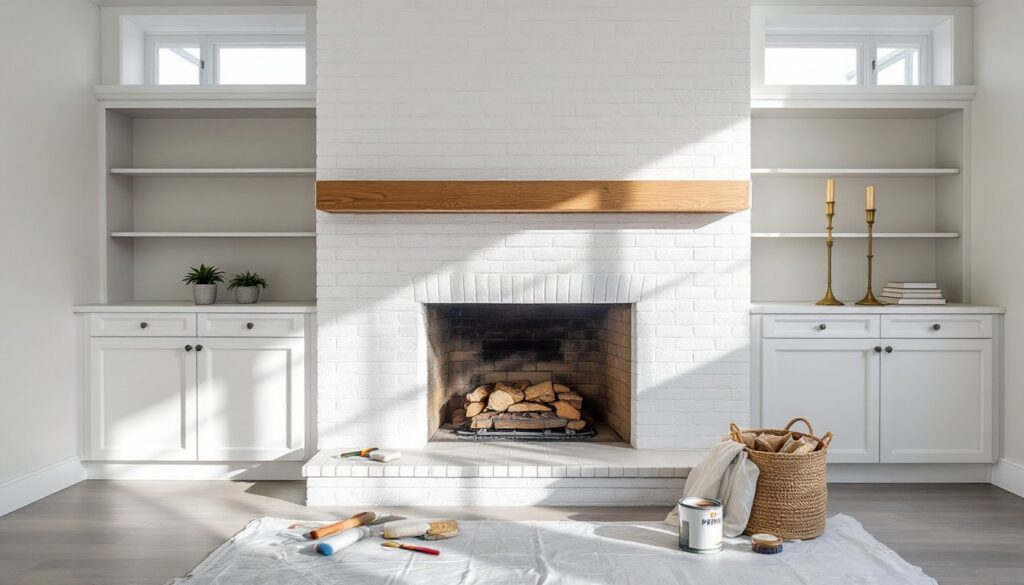
White remains the most popular fireplace paint color for good reason. It brightens dark rooms, provides a neutral backdrop for seasonal decor, and works with nearly any design style from farmhouse to Scandinavian minimalist.
Bright white (pure white with no undertones) delivers maximum contrast and light reflection. It’s ideal for small rooms or spaces with limited natural light. Pair it with dark grout lines left visible for texture, or use a heavy nap roller to fill mortar joints completely for a smoother, more modern look.
Warm whites (whites with cream, beige, or yellow undertones) soften the starkness and complement wood tones, brass fixtures, and warmer color palettes. Benjamin Moore’s White Dove and Sherwin-Williams’ Alabaster are go-to choices that read as white without the sterile feel of pure white.
Off-whites and bone tones add subtle warmth and hide soot better than bright white in active fireplaces. They’re forgiving if cleaning between burns isn’t frequent. For fireplaces in high-traffic family rooms, this practical choice maintains a fresh appearance longer.
White shows detail, so surface prep is non-negotiable. Wire-brush loose mortar, vacuum thoroughly, and apply a stain-blocking masonry primer like KILZ Klear or Zinsser Bulls Eye 1-2-3. Skip the primer, and tannins, soot, and efflorescence will bleed through within months, turning white into blotchy yellow-gray.
Bold and Colorful Painted Fireplace Designs
Dark and saturated colors transform a fireplace into a focal point rather than a backdrop. These choices require confidence but deliver drama that white can’t match.
Charcoal and black fireplaces ground a room and provide striking contrast against white walls or light furniture. Matte finishes (flat or eggshell) absorb light for a sophisticated, non-reflective look, while satin finishes offer easier cleaning in active-use fireplaces. Black hides soot and ash stains better than any other color, making it practical for wood-burning units.
Navy and deep blue bring color without overwhelming a space. These work well in traditional and transitional interiors, pairing naturally with brass or aged bronze fireplace tools and screens. Navy reads as a neutral in evening light but adds depth during the day.
Forest green and sage fireplaces have surged in popularity as earthy, organic tones replace the gray trend. Deep hunter green creates a moody, library-like feel, while softer sage blends with natural wood and woven textures for a relaxed, organic vibe. Both colors show less dust and soot than white while still feeling fresh.
Terracotta and rust tones honor the brick’s original warmth while modernizing the look. These are less common, which makes them standout choices for homeowners wanting something beyond the standard palette. They pair well with Southwestern, bohemian, and warm minimalist styles.
Dark colors require proper lighting. Without adequate ambient or accent lighting, a black or navy fireplace can make a room feel cave-like. Plan for sconces, recessed lighting, or table lamps to balance the visual weight.
Modern Painted Brick Fireplace Techniques
Beyond solid color coverage, textured and layered finishes add character while still updating the look of brick.
German Schmear and Limewash Finishes
German schmear (also called mortar wash) involves smearing thinned mortar or joint compound over brick, leaving some brick exposed for a rustic, old-world look. It’s less committal than full paint coverage since the brick texture and some color remain visible. This technique works especially well in farmhouse, cottage, and European-inspired interiors, as demonstrated in many budget DIY transformations.
To execute: mix white portland cement or pre-mixed mortar to a peanut butter consistency. Trowel it onto the brick in irregular patches, then wipe back with a damp sponge before it fully sets. The result is textured, organic, and forgiving of imperfect application.
Limewash is a breathable, mineral-based coating that bonds to masonry without sealing it completely. Unlike latex or acrylic paint, limewash allows moisture to escape, making it ideal for older homes or fireplaces prone to condensation. It creates a matte, chalky finish with subtle color variation between bricks.
Limewash requires different prep than paint. Clean the brick with water and a stiff brush (no TSP or chemical cleaners, which interfere with bonding). Apply with a masonry brush in a crosshatch pattern, working in small sections. The finish lightens as it cures over 48 hours. For deeper color, apply a second coat.
Limewash patinas over time, developing a weathered look. Some homeowners love this: others prefer the consistency of paint. It’s also more expensive, $40–$70 per gallon versus $25–$40 for quality latex, but coverage is similar at roughly 200 square feet per gallon on porous brick.
Two-Tone and Accent Paint Ideas
Two-tone fireplaces divide the structure horizontally or frame the firebox with a contrasting color. Common approaches include painting the upper portion (above the mantel) white while leaving the lower hearth and firebox surround in a darker shade like charcoal or the original brick. This grounds the fireplace visually and hides the high-wear area where soot and ash are most likely.
Another option: paint the brick surround in a bold color and the mantel in white or natural wood. The contrast draws the eye to the firebox and creates a built-in frame, similar to techniques used in room transformations.
Painted grout lines offer subtle contrast without committing to two full colors. After painting the brick a solid color, use a small artist’s brush or grout pen to trace mortar lines in a slightly darker or lighter shade. This preserves texture and dimensionality, preventing the flat, blob-like appearance that sometimes results from fully covering brick.
For homeowners who want to test the waters, painting just the firebox surround (the brick immediately around the opening) in a contrasting color while leaving the rest of the chimney breast unpainted is a low-risk way to introduce color.
How to Choose the Right Paint and Finish for Your Brick Fireplace
Not all paints perform equally on brick, and choosing the wrong product leads to peeling, flaking, and frustration.
Primer is mandatory. Brick is porous and alkaline, which causes tannin bleed and poor paint adhesion without a stain-blocking masonry primer. Use KILZ Klear, Zinsser Bulls Eye 1-2-3, or Benjamin Moore Fresh Start in a high-build formula. Apply with a 3/4-inch nap roller to push primer into mortar joints. One gallon covers approximately 200–250 square feet on brick, but heavily textured surfaces may require more.
Topcoat options depend on the fireplace’s use and desired look. For active wood-burning fireplaces, use heat-resistant paint rated to at least 200°F on the firebox surround. Standard latex works on the chimney breast and mantel, which don’t experience significant heat.
Acrylic latex paint is the most common choice for brick. It’s durable, breathable, and available in thousands of colors. Choose a satin or eggshell finish for easy cleaning, especially in active-use fireplaces. Matte and flat finishes look sophisticated but show handprints and smudges more readily.
Masonry paint (like BEHR Premium Elastomeric) is formulated to flex with brick’s expansion and contraction. It’s overkill for interior fireplaces but worth considering if the brick experiences temperature swings from an active fire.
Sheen matters. Higher-gloss finishes (satin, semi-gloss) reflect light and are easier to wipe down, while matte finishes hide imperfections but require touch-ups more often. In homes with kids or pets, satin strikes the best balance between durability and aesthetics, as seen in many luxury design choices.
Application tools: Use a 3/4-inch nap roller for the face of the brick and a 2-inch angled brush for mortar joints and edges. A paint sprayer (like a Wagner or Graco handheld) speeds up the process but requires careful masking of hearth, mantel, and surrounding walls. Spraying also uses 20–30% more paint due to overspray.
Safety: Wear a respirator mask (N95 minimum) when priming and painting, especially in enclosed spaces. Brick dust and paint fumes in a confined area are a respiratory hazard. Ventilate the room with fans and open windows. Use drop cloths and painter’s tape to protect flooring, mantel, and any stone or tile hearth.
Budget two coats of primer and two coats of paint for full, even coverage. Brick’s texture and porosity drink paint, so skimping on coats leads to thin, streaky results. Total material cost for an average fireplace (50–75 square feet) runs $75–$150, depending on paint quality and primer choice.